
Mullaghbouy National School
Riverstown, Louth
Key facts
- Mixed
- Pupils enrolled
- 62 smaller than the median Irish primary school (123 pupils)
- Girls and boys
- 27 girls, 35 boys
- Ethos
- Catholic
- Teaching through Irish
- No subjects through Irish
- Roll number
- 02793B the Department of Education reference for this school
School details
Location
About
Mullaghbuoy National School, situated in Riverstown, Dundalk, Co. Louth, provides primary education for children from Junior Infants to Sixth Class. The school operates with a close‑knit team of eight staff members who create a warm, inclusive atmosphere centred on the well‑being of each pupil. Emphasising a caring and nurturing environment, the school strives to ensure every child feels known, valued and encouraged to reach their full potential, both academically and personally. The school’s Catholic ethos is woven throughout daily life, guiding teaching, learning and interpersonal relationships. Core values of kindness, respect and responsibility are deliberately instilled, supporting the spiritual and moral development of the children alongside their academic progress. Strong partnerships with parents and the wider community are regarded as essential, fostering collaborative support that enhances the educational experience and reinforces the school’s role as a vibrant community hub.
History
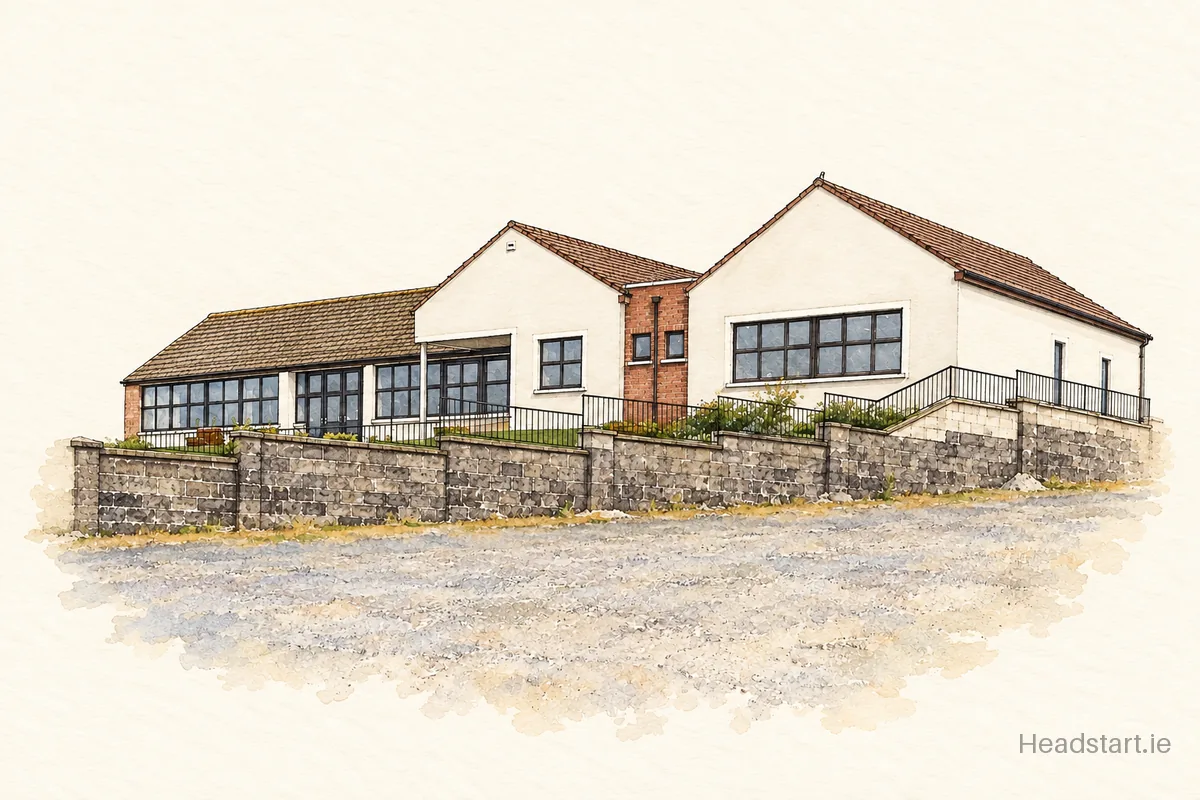
Five acres of land were leased in Castletowncooley, locally known as “Rourkestown”, and a school building was ready by December 1842 to accommodate up to eighty boys and eighty girls. The first teacher was Thomas Levins, trained at Dromin National School, succeeding his father Peter Levins who had run a small cabin school nearby for about ten years. The original 1842 school, later repurposed as the O’Brien family home, was replaced in 1967 by the present Mullaghbuoy National School, situated further up the road nearer the chapel.
Applying to Mullaghbouy National School
For a September 2027 place, a school's formal admissions process cannot begin before 1 October 2026. The school sets its own opening and closing dates in its annual admission notice.
National term dates 2026/27
Irish schools follow a standardised school year, so these nationwide primary school dates apply broadly to Mullaghbouy National School. Individual schools set their own discretionary closure days, confirm exact dates with the school.
- October Mid-Term Break: Mon 26 Oct – Fri 30 Oct 2026
- Christmas Holidays: Wed 23 Dec 2026 – Tue 5 Jan 2027
- February Mid-Term Break: Thu 18 Feb – Fri 19 Feb 2027 (post-primary schools: Mon 15 Feb – Fri 19 Feb 2027)
- Easter Holidays: Mon 22 Mar – Sun 4 Apr 2027
Primary schools close for the last two days of the February mid-term week and may use discretionary days to take the full week, so their break can be shorter than post-primary schools'.
Frequently asked questions about Mullaghbouy National School
How many pupils attend Mullaghbouy National School?
Mullaghbouy National School has 62 pupils enrolled, 27 girls and 35 boys. That makes it smaller than the median Irish primary school, which has 123 pupils.
Is Mullaghbouy National School a DEIS school?
No. Mullaghbouy National School is not part of DEIS, the Department of Education programme of additional supports for schools serving communities at risk of educational disadvantage. Not holding DEIS status says nothing about how good a school is, only about the profile of the community it serves.
What is the ethos of Mullaghbouy National School?
Mullaghbouy National School has a Catholic ethos. It is a mixed primary school.
Illustration based on a photo by Eric Jones. Photo and adapted illustration: CC BY-SA 2.0.