
Upper Newtown National School
Faugheen, Tipperary
Key facts
- Mixed
- Pupils enrolled
- 51 smaller than the median Irish primary school (123 pupils)
- Girls and boys
- 28 girls, 23 boys
- Ethos
- Catholic
- Teaching through Irish
- No subjects through Irish
- Roll number
- 09967U the Department of Education reference for this school
School details
About
Upper Newtown National School is a small, four‑teacher, rural primary school situated in the townland of Newtown, midway between the villages of Faugheen and Ahenny in County Tipperary. With an enrolment of around 58 pupils, the school offers a close‑knit community atmosphere where individual attention and personalised learning are central to everyday practice. The school’s ethos is firmly Catholic yet expressly respectful and inclusive of all faiths, reflecting a commitment to nurture the spiritual, moral and cultural development of every child alongside their intellectual and physical growth. The school’s motto – “Respect ourselves, respect others, respect our environment” – underpins a curriculum that balances academic rigour with a strong emphasis on personal responsibility and environmental stewardship. The mission statement highlights a holistic approach, seeking to develop pupils intellectually, physically, culturally, morally and spiritually, and to foster a living relationship with God and with one another. Set against the backdrop of the Ahenny High Crosses and the slopes of Slievenamon, the school benefits from a tranquil rural setting that enriches outdoor learning and community involvement.
History
Newtown Upper National School was constructed in 1868 after a local dispute over its location was resolved by placing the school between the villages of Faugheen and Ahenny. Historical recollections note that in the early 1940s the school operated without running water, with pupils fetching timber from nearby woods and assisting with chores such as emptying lavatory buckets. These anecdotes illustrate the school’s long‑standing role as a focal point of the rural community.
Applying to Upper Newtown National School
For a September 2027 place, a school's formal admissions process cannot begin before 1 October 2026. The school sets its own opening and closing dates in its annual admission notice.
National term dates 2026/27
Irish schools follow a standardised school year, so these nationwide primary school dates apply broadly to Upper Newtown National School. Individual schools set their own discretionary closure days, confirm exact dates with the school.
- October Mid-Term Break: Mon 26 Oct – Fri 30 Oct 2026
- Christmas Holidays: Wed 23 Dec 2026 – Tue 5 Jan 2027
- February Mid-Term Break: Thu 18 Feb – Fri 19 Feb 2027 (post-primary schools: Mon 15 Feb – Fri 19 Feb 2027)
- Easter Holidays: Mon 22 Mar – Sun 4 Apr 2027
Primary schools close for the last two days of the February mid-term week and may use discretionary days to take the full week, so their break can be shorter than post-primary schools'.
Frequently asked questions about Upper Newtown National School
How many pupils attend Upper Newtown National School?
Upper Newtown National School has 51 pupils enrolled, 28 girls and 23 boys. That makes it smaller than the median Irish primary school, which has 123 pupils.
Is Upper Newtown National School a DEIS school?
No. Upper Newtown National School is not part of DEIS, the Department of Education programme of additional supports for schools serving communities at risk of educational disadvantage. Not holding DEIS status says nothing about how good a school is, only about the profile of the community it serves.
What is the ethos of Upper Newtown National School?
Upper Newtown National School has a Catholic ethos. It is a mixed primary school.
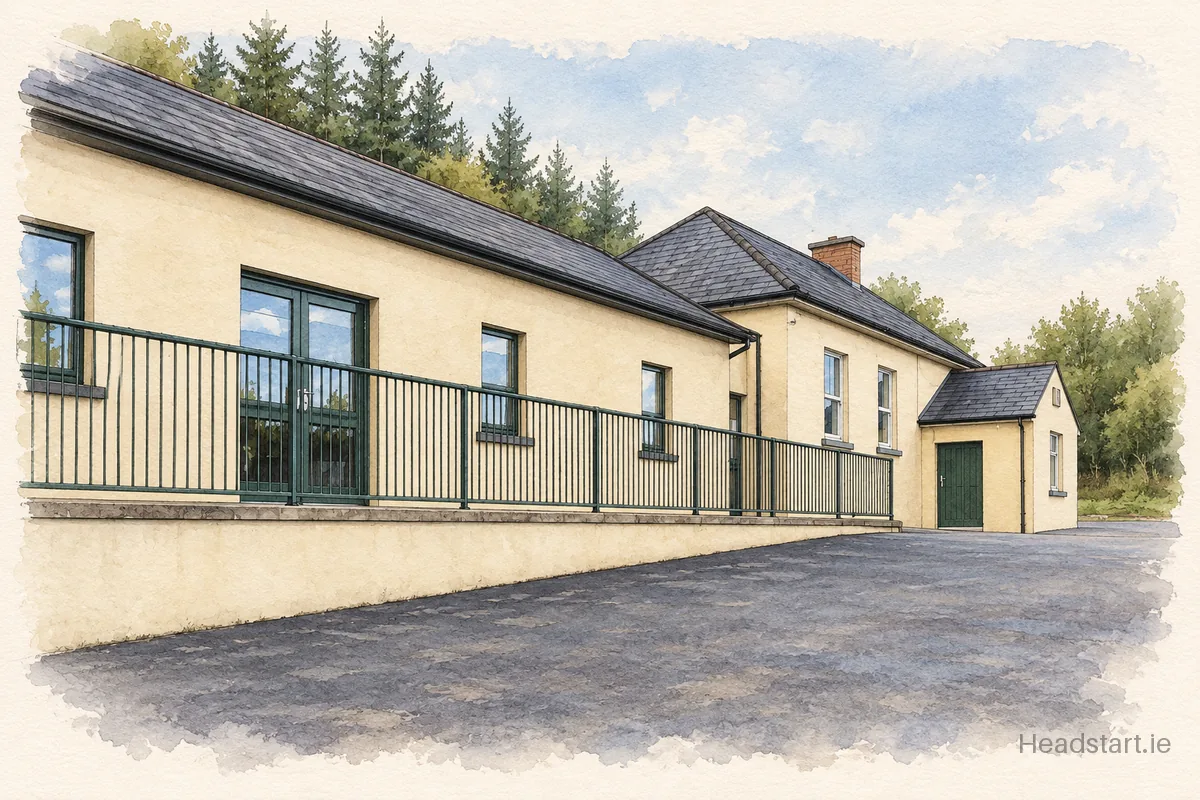
Illustration based on a photo by kevin higgins. Photo and adapted illustration: CC BY-SA 2.0.