
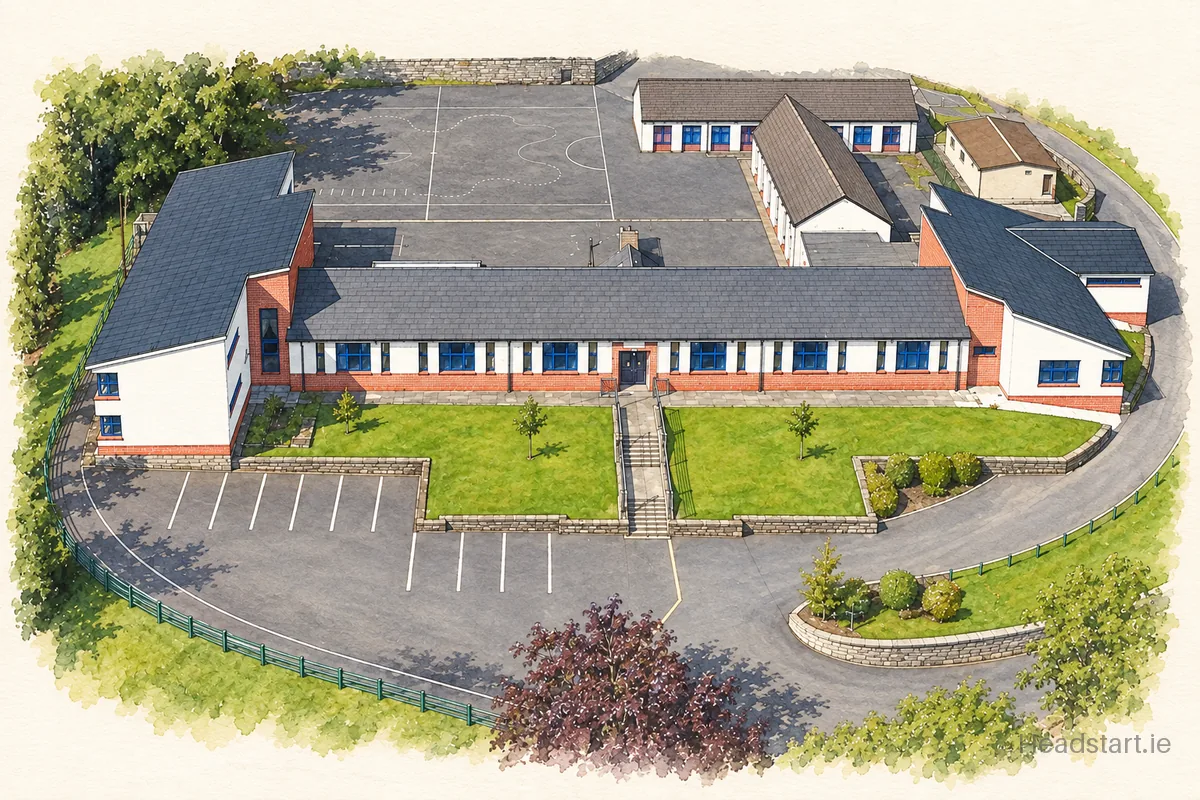
St. Felim's National School
Cavan
Key facts
- DEIS
- Boys
- Pupils enrolled
- 265 larger than the median Irish primary school (123 pupils)
- Girls and boys
- 4 girls, 261 boys
- Ethos
- Catholic
- Teaching through Irish
- No subjects through Irish
- Roll number
- 17326B the Department of Education reference for this school
School details
Location
About
St. Felim’s National School is a senior boys primary school catering for pupils from 2nd to 6th class, with an enrolment of approximately 276 children. The school delivers a balanced curriculum that combines strong academic foundations with a wide‑ranging co‑curricular programme. Core subjects are supported by dedicated speech and language classes, and the school places particular emphasis on literacy and numeracy through initiatives such as Accelerated Reader, Spellings for Me and the “Maths for Fun” programme. A hallmark of St. Felim’s is its extensive sports and activity offering. Pupils regularly take part in swimming, basketball, hurling, GAA, gymnastics, boxing, tennis, golf, and bike‑safety lessons, as well as organised trips to local attractions, agricultural colleges and museums. The school also runs an active quiz team, chess and draughts competitions, an after‑school art club, and a student council, fostering teamwork, confidence and creative expression. Facilities include a gymnasium, access to local sports pitches and swimming pools, and dedicated spaces for arts and language support, all underpinned by a health‑promoting and green‑school ethos.
History
Cavan National School was erected in 1862 for the Christian Brothers by Most Rev. Dr. Browne, Bishop of Kilmore. In 1868 the National School Commissioners assumed control, converting it into a national school. In 1942 the De La Salle Brothers established a new six‑classroom school on the site of the former County Jail; the institution became popularly known as “The Boys’ School”. St. Felim’s National School, built that year, remained under the De La Salle Brothers until it later transferred to the patronage of the Catholic Church, continuing its tradition of boys’ primary education.
Applying to St. Felim's National School
For a September 2027 place, a school's formal admissions process cannot begin before 1 October 2026. The school sets its own opening and closing dates in its annual admission notice.
National term dates 2026/27
Irish schools follow a standardised school year, so these nationwide primary school dates apply broadly to St. Felim's National School. Individual schools set their own discretionary closure days, confirm exact dates with the school.
- October Mid-Term Break: Mon 26 Oct – Fri 30 Oct 2026
- Christmas Holidays: Wed 23 Dec 2026 – Tue 5 Jan 2027
- February Mid-Term Break: Thu 18 Feb – Fri 19 Feb 2027 (post-primary schools: Mon 15 Feb – Fri 19 Feb 2027)
- Easter Holidays: Mon 22 Mar – Sun 4 Apr 2027
Primary schools close for the last two days of the February mid-term week and may use discretionary days to take the full week, so their break can be shorter than post-primary schools'.
Frequently asked questions about St. Felim's National School
How many pupils attend St. Felim's National School?
St. Felim's National School has 265 pupils enrolled, 4 girls and 261 boys. That makes it larger than the median Irish primary school, which has 123 pupils.
Is St. Felim's National School a DEIS school?
Yes. St. Felim's National School is part of DEIS, the Department of Education programme called Delivering Equality of Opportunity in Schools. DEIS schools serve communities at risk of educational disadvantage and receive additional supports, which can include smaller classes, extra teaching posts and funding for books and meals.
What is the ethos of St. Felim's National School?
St. Felim's National School has a Catholic ethos. It is a boys' primary school.