
St Andrews College
Blackrock, Dublin
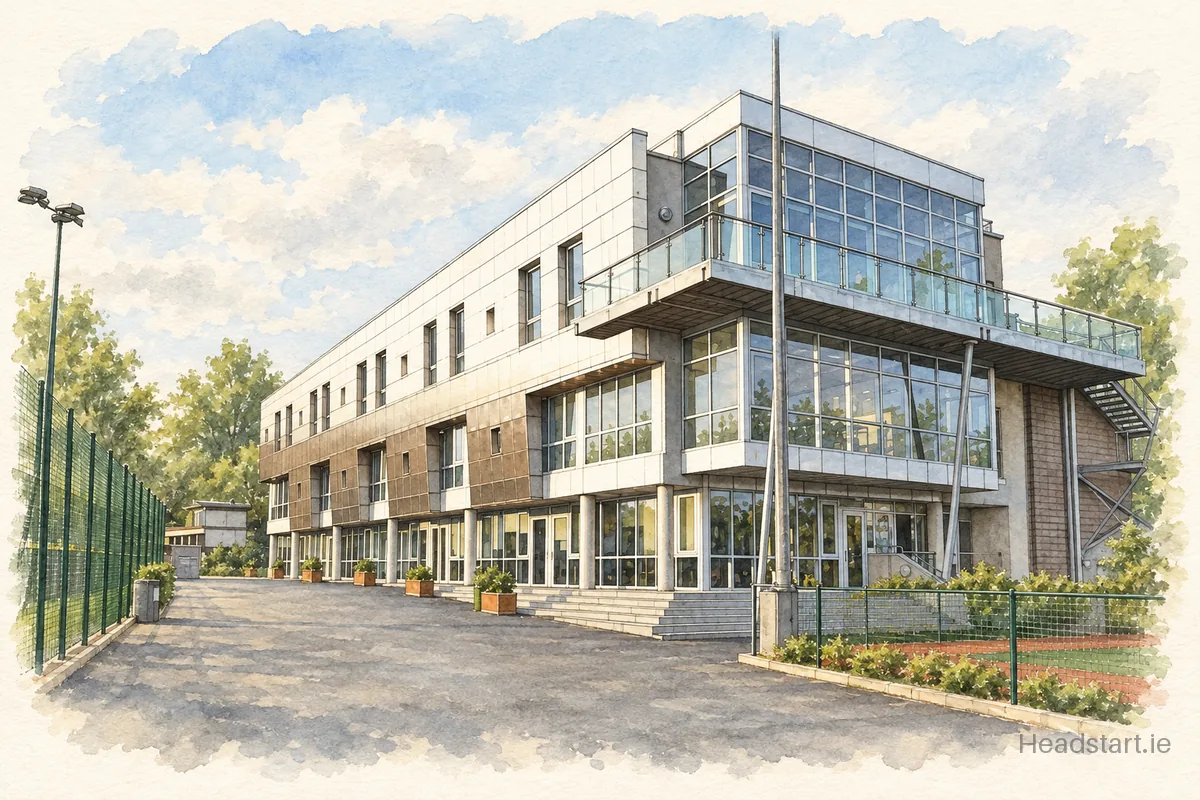
Key facts
- Mixed
- Pupils enrolled
- 1,011 larger than the median Irish post-primary school (585 pupils)
- Girls and boys
- 524 girls, 487 boys
- Ethos
- Presbyterian
- Teaching through Irish
- No subjects taught through Irish
- Roll number
- 60650F the Department of Education reference for this school
School details
Location
About
St Andrew’s College is an independent, co‑educational day school situated on a spacious campus in Booterstown, Dublin. The college offers a broad, balanced curriculum that combines rigorous academic study with a strong emphasis on personal development, global citizenship and active participation. Students benefit from a learning environment that nurtures curiosity and a lifelong love of learning, supported by high expectations of behaviour and a deep‑rooted ethos of academic excellence and pastoral care. The school’s facilities reflect its commitment to a well‑rounded education. Modern learning spaces include the Collen Building, a Sixth Form Centre, and Houseroom Area 5 which houses a computer suite, home economics rooms and changing facilities. Sporting provision is extensive, featuring a sports hall, two astroturf hockey pitches, a Jubilee swimming pool and ample playing fields. Enrichment programmes such as the International Baccalaureate, Model United Nations and a long‑standing tradition of community service further enhance students’ experiences, preparing them for success beyond the classroom.
History
St Andrew’s College was conceived in 1890 by a group of Presbyterian clergymen and opened on 8 January 1894 at St Stephen’s Green with 64 pupils. Early milestones included the establishment of a preparatory school in Rathgar (1905) and the first Leinster Senior Cup win in rugby (1906). The college moved to Wellington Place, Donnybrook in 1937 and, after acquiring its present Booterstown site from the Sisters of Mercy in 1968, opened the new campus in 1971. Co‑education began in 1973, the International Baccalaureate programme was introduced in 1985 and the first Model United Nations conference was held in 1988. Subsequent developments have included a sports hall (1989), a Sixth Form Centre (1993), the closure of the boarding department (1995), astroturf pitches (2001), a Uganda service‑learning project (2005) and the Collen Building (2010).
Applying to St Andrews College
For a September 2027 place, a school's formal admissions process cannot begin before 1 October 2026. The school sets its own opening and closing dates in its annual admission notice.
National term dates 2026/27
Irish schools follow a standardised school year, so these nationwide post-primary school dates apply broadly to St Andrews College. Individual schools set their own discretionary closure days, confirm exact dates with the school.
- October Mid-Term Break: Mon 26 Oct – Fri 30 Oct 2026
- Christmas Holidays: Wed 23 Dec 2026 – Tue 5 Jan 2027
- February Mid-Term Break: Mon 15 Feb – Fri 19 Feb 2027 (primary schools: Thu 18 Feb – Fri 19 Feb 2027)
- Easter Holidays: Mon 22 Mar – Sun 4 Apr 2027
Primary schools close for the last two days of the February mid-term week and may use discretionary days to take the full week, so their break can be shorter than post-primary schools'.
Frequently asked questions about St Andrews College
How many pupils attend St Andrews College?
St Andrews College has 1,011 pupils enrolled, 524 girls and 487 boys. That makes it larger than the median Irish post-primary school, which has 585 pupils.
Is St Andrews College a DEIS school?
No. St Andrews College is not part of DEIS, the Department of Education programme of additional supports for schools serving communities at risk of educational disadvantage. Not holding DEIS status says nothing about how good a school is, only about the profile of the community it serves.
What is the ethos of St Andrews College?
St Andrews College has a Presbyterian ethos. It is a mixed post-primary school.