
Sligo Grammar School
Sligo
Key facts
- Mixed
- Pupils enrolled
- 475 smaller than the median Irish post-primary school (585 pupils)
- Girls and boys
- 203 girls, 272 boys
- Ethos
- Church Of Ireland
- Teaching through Irish
- No subjects taught through Irish
- Roll number
- 65190W the Department of Education reference for this school
School details
Location
About
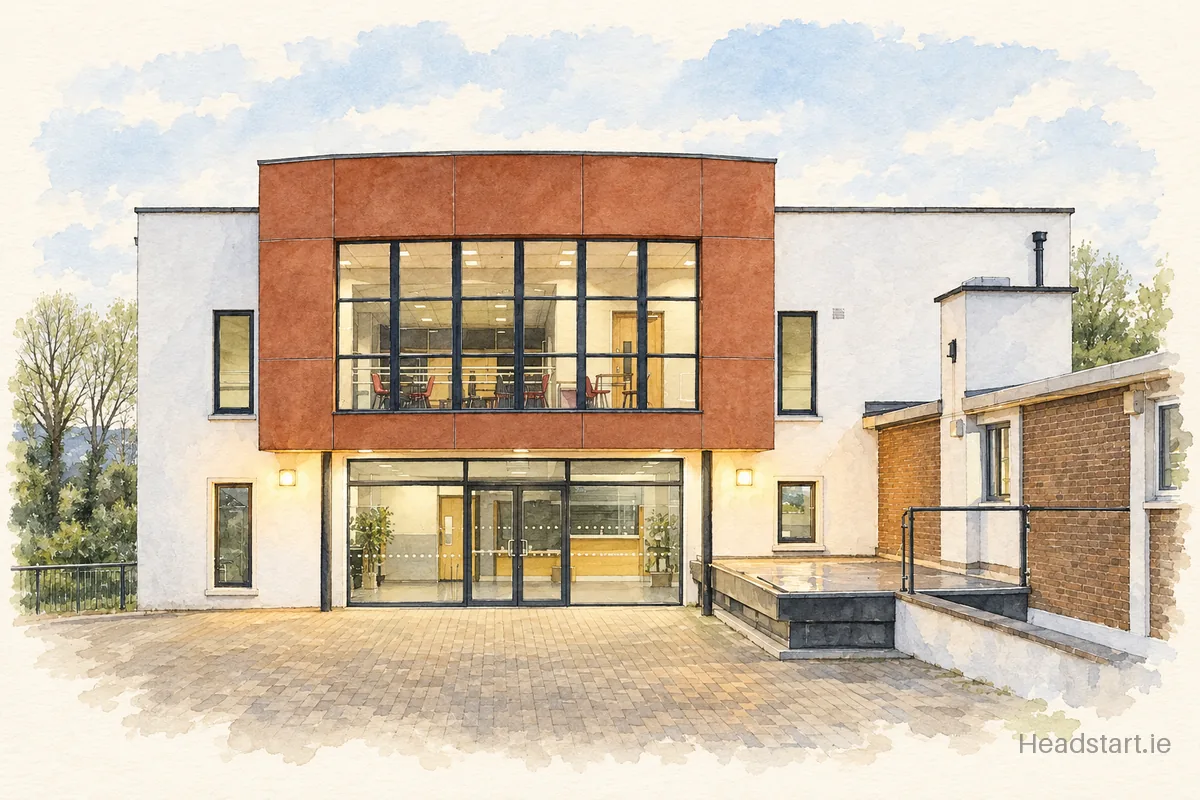
Sligo Grammar School delivers a holistic, co‑educational experience rooted in respect, trust and collaboration. The school’s ethos combines a strong academic programme with a broad spectrum of extracurricular activities, including sport, clubs, societies and a vibrant student voice. Emphasis is placed on developing well‑rounded individuals who become reliable citizens, with particular attention to personal and social development through teamwork, community involvement and a supportive learning environment. The campus boasts modern facilities following a €3.5 million renovation in 2012, featuring a new extension, an astroturf pitch, a fully re‑laid rugby pitch and updated boarding accommodation. Dedicated teaching blocks, spacious dormitories and specialised classrooms support both academic rigour and creative pursuits. The school’s Christian, Church of Ireland heritage informs daily worship, assemblies and a values‑based curriculum that promotes tolerance, social responsibility and the pursuit of excellence for every learner. Guided by its mission to promote excellence within an inclusive, supportive community that reflects Christian values, Sligo Grammar School encourages informed reason, academic diligence and active participation in local community service, preparing students for life beyond the classroom.
History
Sligo Grammar School traces its origins back over 400 years. The earliest predecessor, the Diocesan School in Elphin, was founded in 1570 during the reign of Elizabeth I. In 1752 a Charter School was established under a Royal Charter, later closing in 1843. The Elphin Diocesan School moved to the former Charter School buildings in 1862. In 1907 the site was transferred to the Incorporated Society, which added dormitories and classrooms that now form the boys’ house. A significant merger occurred in 1947 when the all‑boys Grammar School combined with the all‑girls Sligo High School (founded 1911), leading to the acquisition of the “Hermitage” residence for girl boarders. Subsequent developments included a new teaching block (1972), a lease to Sligo Grammar School Limited (1976), the rebuilding of the Hermitage after a fire (1978), and a major €3.5 million refurbishment in 2012 that added a new extension, astroturf and a re‑laid rugby pitch.
Applying to Sligo Grammar School
For a September 2027 place, a school's formal admissions process cannot begin before 1 October 2026. The school sets its own opening and closing dates in its annual admission notice.
National term dates 2026/27
View Sligo Grammar School's own calendar (2026/2027 school year)
Irish schools follow a standardised school year, so these nationwide post-primary school dates apply broadly to Sligo Grammar School. The school publishes its own calendar, linked above, and that is the authoritative source for its reopening date and discretionary closure days.
- October Mid-Term Break: Mon 26 Oct – Fri 30 Oct 2026
- Christmas Holidays: Wed 23 Dec 2026 – Tue 5 Jan 2027
- February Mid-Term Break: Mon 15 Feb – Fri 19 Feb 2027 (primary schools: Thu 18 Feb – Fri 19 Feb 2027)
- Easter Holidays: Mon 22 Mar – Sun 4 Apr 2027
Primary schools close for the last two days of the February mid-term week and may use discretionary days to take the full week, so their break can be shorter than post-primary schools'.
Frequently asked questions about Sligo Grammar School
How many pupils attend Sligo Grammar School?
Sligo Grammar School has 475 pupils enrolled, 203 girls and 272 boys. That makes it smaller than the median Irish post-primary school, which has 585 pupils.
Is Sligo Grammar School a DEIS school?
No. Sligo Grammar School is not part of DEIS, the Department of Education programme of additional supports for schools serving communities at risk of educational disadvantage. Not holding DEIS status says nothing about how good a school is, only about the profile of the community it serves.
What is the ethos of Sligo Grammar School?
Sligo Grammar School has a Church Of Ireland ethos. It is a mixed post-primary school.