
Shanbally National School
Ringaskiddy, Cork
Key facts
- Mixed
- Pupils enrolled
- 192 larger than the median Irish primary school (123 pupils)
- Girls and boys
- 83 girls, 109 boys
- Ethos
- Catholic
- Teaching through Irish
- No subjects through Irish
- Roll number
- 13889C the Department of Education reference for this school
School details
Location
About
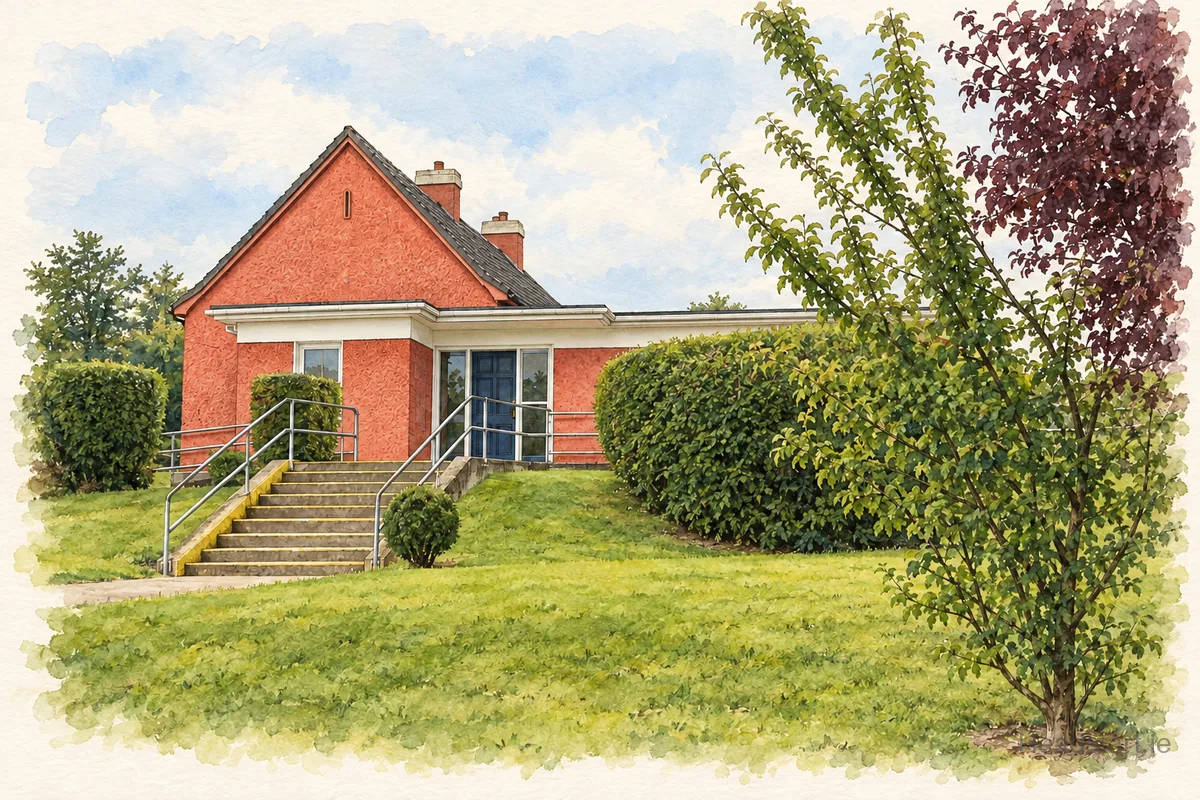
Shanbally National School is a co‑educational primary school located in the friendly village of Shanbally, about 16 km from Cork City. The school serves roughly 200 pupils across eight mainstream classes and a dedicated Developmental Language Disorder (DLD) class, providing a supportive environment for children with speech and language needs. The ethos “Nach Deas a Bheith Óg” underpins a fun, safe and secure atmosphere where a child‑centred approach and strong home‑school partnership foster a love of learning. The campus centres on a purpose‑built building erected in 1964 and extended in 1993, housing three mainstream classrooms, a purpose room, and the school office. Modern facilities support a broad curriculum that includes music, arts, crafts and outdoor activities, while the DLD class offers specialised language support. A team of qualified teachers and support assistants work collaboratively to deliver a balanced programme that blends traditional values with progressive teaching methods.
History
The earliest records show a Shanbally Girls’ School (1886) and a Shanbally Boys’ School (1890) operating separately in modest premises. A new school building was erected near the church in 1890, and under the long‑serving leadership of John Barry from 1898 the school began to improve. In 1932 Richard B. O’Flynn became principal, expanding the curriculum to include music, sewing, drawing and sports, and overseeing the construction of a new school building whose foundation stone was laid in 1964 and opened in May 1965. Subsequent principals introduced the New Curriculum in 1970 and oversaw further extensions in 1993. The school continues to thrive as a focal point for the local community under contemporary leadership.
Applying to Shanbally National School
For a September 2027 place, a school's formal admissions process cannot begin before 1 October 2026. The school sets its own opening and closing dates in its annual admission notice.
National term dates 2026/27
Irish schools follow a standardised school year, so these nationwide primary school dates apply broadly to Shanbally National School. Individual schools set their own discretionary closure days, confirm exact dates with the school.
- October Mid-Term Break: Mon 26 Oct – Fri 30 Oct 2026
- Christmas Holidays: Wed 23 Dec 2026 – Tue 5 Jan 2027
- February Mid-Term Break: Thu 18 Feb – Fri 19 Feb 2027 (post-primary schools: Mon 15 Feb – Fri 19 Feb 2027)
- Easter Holidays: Mon 22 Mar – Sun 4 Apr 2027
Primary schools close for the last two days of the February mid-term week and may use discretionary days to take the full week, so their break can be shorter than post-primary schools'.
Frequently asked questions about Shanbally National School
How many pupils attend Shanbally National School?
Shanbally National School has 192 pupils enrolled, 83 girls and 109 boys. That makes it larger than the median Irish primary school, which has 123 pupils.
Is Shanbally National School a DEIS school?
No. Shanbally National School is not part of DEIS, the Department of Education programme of additional supports for schools serving communities at risk of educational disadvantage. Not holding DEIS status says nothing about how good a school is, only about the profile of the community it serves.
What is the ethos of Shanbally National School?
Shanbally National School has a Catholic ethos. It is a mixed primary school.
Illustration based on a photo by Robert Ashby. Photo and adapted illustration: CC BY-SA 2.0.