
Ringaskiddy Lower Harbour National School
Cork
Key facts
- DEIS
- Mixed
- Pupils enrolled
- 58 smaller than the median Irish primary school (123 pupils)
- Girls and boys
- 26 girls, 32 boys
- Ethos
- Catholic
- Teaching through Irish
- No subjects through Irish
- Roll number
- 20049S the Department of Education reference for this school
School details
Location
About
Ringaskiddy Lower Harbour National School is a small, co‑educational primary school set in a rural environment close to the satellite town of Carrigaline and the bustling industries of Cork Harbour. The school caters for 58 pupils and provides a dedicated Special Class, ensuring inclusive education for children with additional needs. A team of class teachers, learning support and resource staff, as well as special needs assistants, work together to create a nurturing atmosphere where each child is known personally and encouraged to develop their unique gifts. The school places a strong emphasis on holistic development, supporting pupils emotionally, socially and academically. Modern facilities include updated toilets, sinks, central heating and a tarmacked playground, reflecting a history of continual improvement driven by active parental involvement. Community engagement is evident through regular events such as beach clean‑ups, autism assistance dog visits and local sports activities, fostering a sense of belonging and civic responsibility among the learners.
History
Ringaskiddy Lower Harbour National School was founded in 1898 to serve children from Loughbeg, Barnahely and Ringaskiddy Village, originally operating as separate boys’ and girls’ schools in a single building. In February 1938 the school became co‑educational, and during the 1960s the internal dividing walls were removed, giving the school its present layout. Improvements over the decades included the installation of water‑fed toilets and a tarmacked yard in the late 1950s, oil‑fired central heating and lowered ceilings in 1969, and the addition of modern furniture, sinks and further toilet facilities in the early 1980s. In 1996 the one‑teacher school on Haulbowline Naval Base closed and amalgamated with the school, prompting the current name, Ringaskiddy Lower Harbour National School.
Applying to Ringaskiddy Lower Harbour National School
For a September 2027 place, a school's formal admissions process cannot begin before 1 October 2026. The school sets its own opening and closing dates in its annual admission notice.
National term dates 2026/27
Irish schools follow a standardised school year, so these nationwide primary school dates apply broadly to Ringaskiddy Lower Harbour National School. Individual schools set their own discretionary closure days, confirm exact dates with the school.
- October Mid-Term Break: Mon 26 Oct – Fri 30 Oct 2026
- Christmas Holidays: Wed 23 Dec 2026 – Tue 5 Jan 2027
- February Mid-Term Break: Thu 18 Feb – Fri 19 Feb 2027 (post-primary schools: Mon 15 Feb – Fri 19 Feb 2027)
- Easter Holidays: Mon 22 Mar – Sun 4 Apr 2027
Primary schools close for the last two days of the February mid-term week and may use discretionary days to take the full week, so their break can be shorter than post-primary schools'.
Frequently asked questions about Ringaskiddy Lower Harbour National School
How many pupils attend Ringaskiddy Lower Harbour National School?
Ringaskiddy Lower Harbour National School has 58 pupils enrolled, 26 girls and 32 boys. That makes it smaller than the median Irish primary school, which has 123 pupils.
Is Ringaskiddy Lower Harbour National School a DEIS school?
Yes. Ringaskiddy Lower Harbour National School is part of DEIS, the Department of Education programme called Delivering Equality of Opportunity in Schools. DEIS schools serve communities at risk of educational disadvantage and receive additional supports, which can include smaller classes, extra teaching posts and funding for books and meals.
What is the ethos of Ringaskiddy Lower Harbour National School?
Ringaskiddy Lower Harbour National School has a Catholic ethos. It is a mixed primary school.
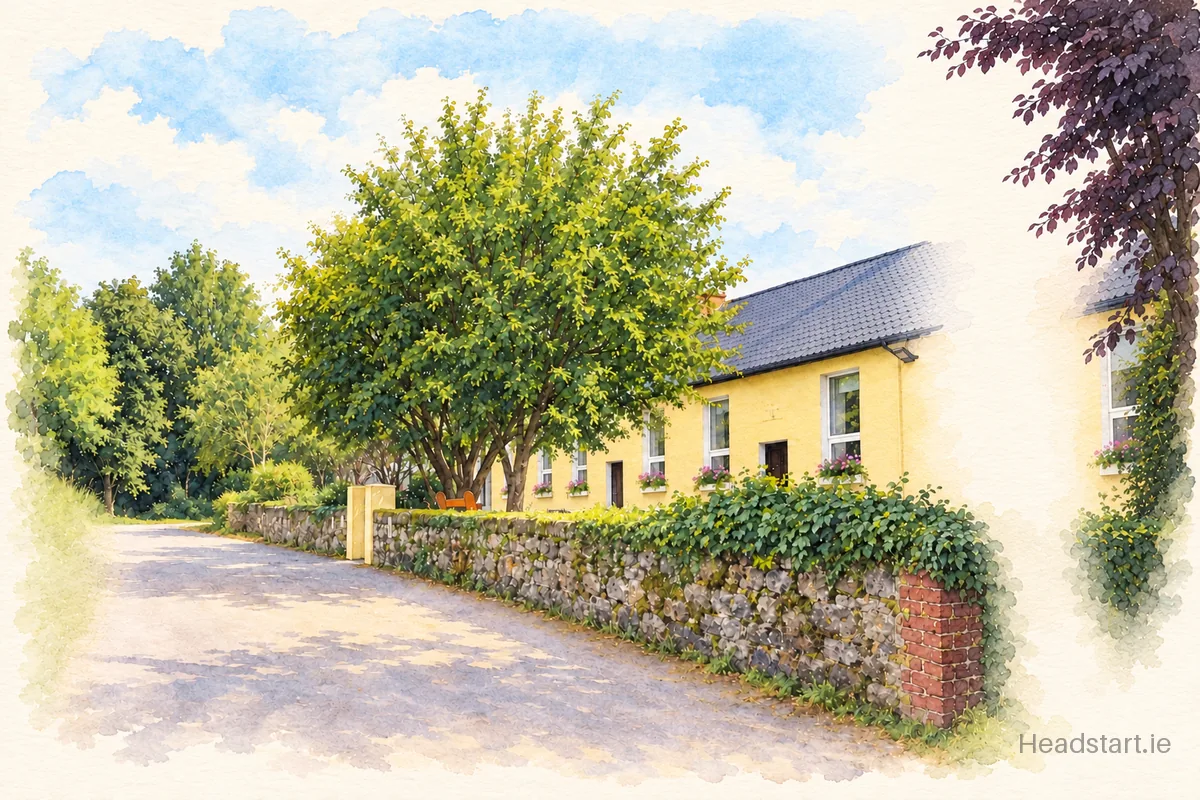
Illustration based on a photo by Robert Ashby. Photo and adapted illustration: CC BY-SA 2.0.