
Newtown School
Waterford City, Waterford
Key facts
- Mixed
- Pupils enrolled
- 415 smaller than the median Irish post-primary school (585 pupils)
- Girls and boys
- 208 girls, 207 boys
- Ethos
- Quaker
- Teaching through Irish
- No subjects taught through Irish
- Roll number
- 65010R the Department of Education reference for this school
School details
Location
About
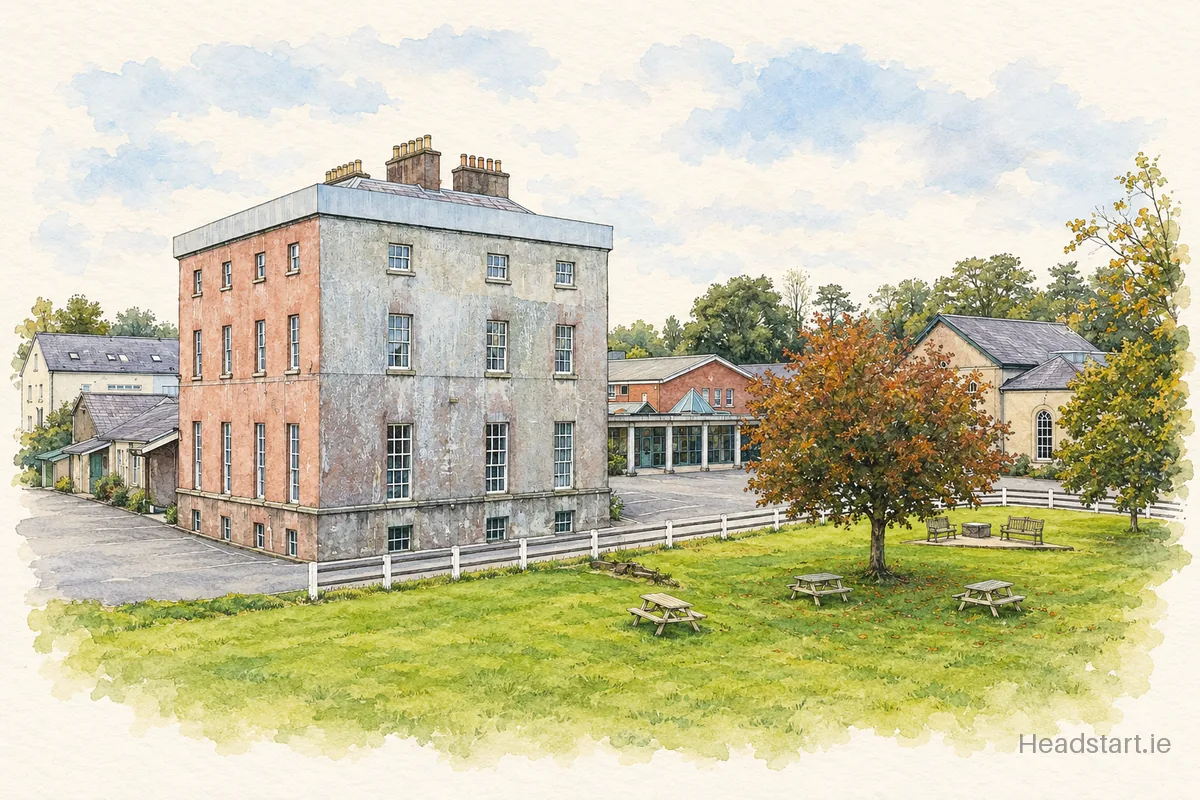
Newtown School, founded in 1798, is a co‑educational boarding and day secondary school situated on an 18‑acre site in Waterford city. Rooted in the Quaker tradition, the school prioritises the development of the whole person – academically, socially, spiritually and physically – rather than solely exam results. Teaching is delivered in small classes with a strong emphasis on pastoral care, encouraging independence, confidence and respect. The curriculum is complemented by a wide range of extracurricular activities, including sport, music, drama, art and practical subjects such as woodwork, gardening and science, fostering a culture of curiosity and lifelong learning. The campus combines historic buildings with modern facilities. Students benefit from dedicated boarding houses, a well‑equipped science laboratory (the first school lab in Ireland), a swimming pool, gymnasium, infirmary, and specialised spaces for music and sports. The school also participates in international programmes such as Erasmus+ and collaborates with SETU Libraries on digital outreach, enhancing both local community engagement and global connections.
History
Newtown School was established in the turbulent year of 1798 on the former Waterford estate of Sir Thomas Wyse, originally to educate Quaker children from Munster. The main house served as boarding accommodation while a converted stable provided classrooms, reflecting Quaker simplicity. Early on, the school incorporated manual and practical subjects – woodwork, art, science, natural history, gardening, beekeeping and sewing – alongside the standard curriculum, and opened its first library in 1813. Expansions over the 19th century added a swimming pool (1890), gymnasium (1892) and Ireland’s first school science laboratory (1895). Facing possible closure in 1925, the school revived under Headmaster Arnold Marsh, gaining recognition from the Department of Education and expanding its facilities, including an infirmary and lecture room. Throughout its 225‑year history, Newtown has evolved into a distinguished multi‑denominational institution while retaining its Quaker ethos of respect, equality and community.
Applying to Newtown School
For a September 2027 place, a school's formal admissions process cannot begin before 1 October 2026. The school sets its own opening and closing dates in its annual admission notice.
National term dates 2026/27
Irish schools follow a standardised school year, so these nationwide post-primary school dates apply broadly to Newtown School. Individual schools set their own discretionary closure days, confirm exact dates with the school.
- October Mid-Term Break: Mon 26 Oct – Fri 30 Oct 2026
- Christmas Holidays: Wed 23 Dec 2026 – Tue 5 Jan 2027
- February Mid-Term Break: Mon 15 Feb – Fri 19 Feb 2027 (primary schools: Thu 18 Feb – Fri 19 Feb 2027)
- Easter Holidays: Mon 22 Mar – Sun 4 Apr 2027
Primary schools close for the last two days of the February mid-term week and may use discretionary days to take the full week, so their break can be shorter than post-primary schools'.
Frequently asked questions about Newtown School
How many pupils attend Newtown School?
Newtown School has 415 pupils enrolled, 208 girls and 207 boys. That makes it smaller than the median Irish post-primary school, which has 585 pupils.
Is Newtown School a DEIS school?
No. Newtown School is not part of DEIS, the Department of Education programme of additional supports for schools serving communities at risk of educational disadvantage. Not holding DEIS status says nothing about how good a school is, only about the profile of the community it serves.
What is the ethos of Newtown School?
Newtown School has a Quaker ethos. It is a mixed post-primary school.