
Kilkenny College
Kilkenny
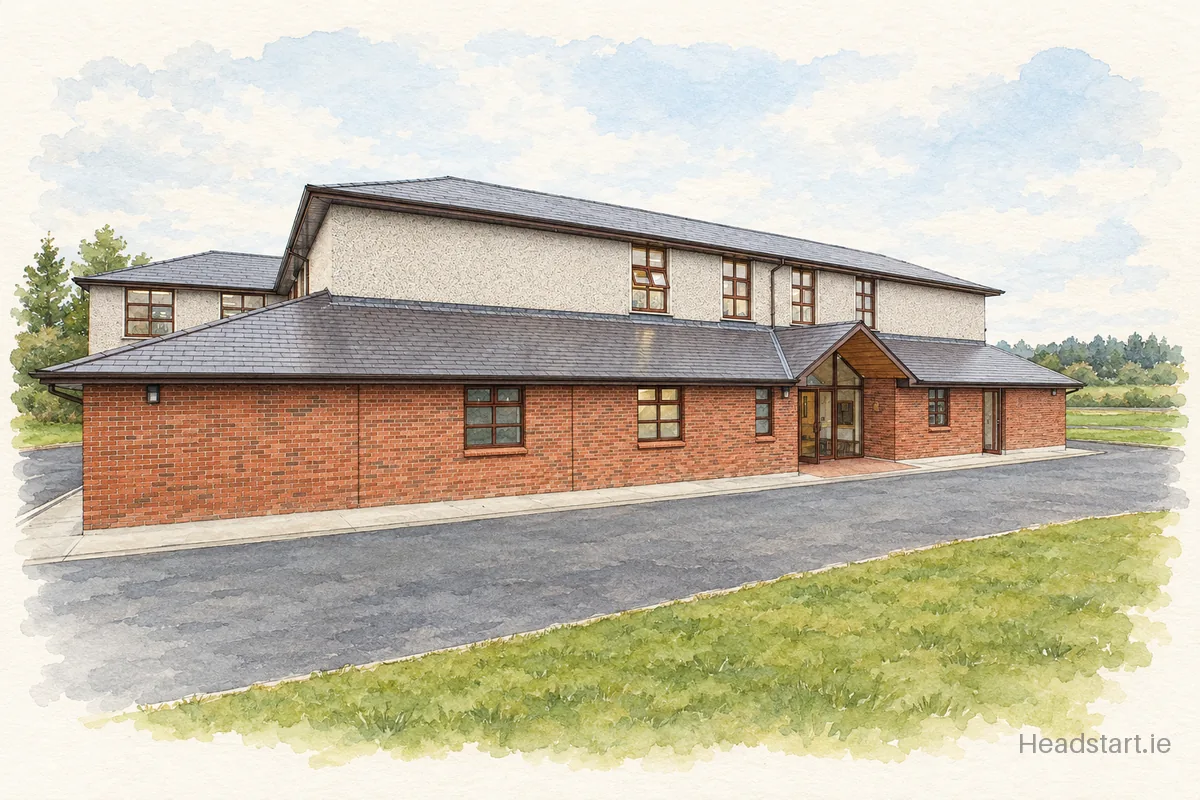
Key facts
- Mixed
- Pupils enrolled
- 928 larger than the median Irish post-primary school (585 pupils)
- Girls and boys
- 450 girls, 478 boys
- Ethos
- Church Of Ireland
- Teaching through Irish
- No subjects taught through Irish
- Roll number
- 61570M the Department of Education reference for this school
School details
Location
About
Kilkenny College is a Church of Ireland co‑educational boarding and day school that delivers a broad, academically rigorous curriculum within a Christian, cultural and sporting heritage. The college places the pupil at the centre of learning, offering a six‑year secondary cycle that balances depth of subject knowledge with a wide range of extra‑curricular activities, including sport, music and the arts. Its ethos is rooted in Gospel values such as mercy, equality and respect for diversity, fostering an inclusive environment where students are encouraged to develop purpose, self‑esteem and a commitment to community life. The campus occupies a landscaped 50‑acre site framed by mature trees and features a modern complex of classrooms, science laboratories, libraries, dining and catering facilities, as well as purpose‑built dormitories for boarders. State‑of‑the‑art sporting amenities support a vibrant programme of rugby, athletics and other team games, while dedicated music and arts spaces enable creative expression. Boarding is presented as an enriching pastoral experience, with a structured daily programme that complements academic study and promotes personal growth.
History
Kilkenny College traces its origins to a 13th‑century college of vicars’ choral at St Canice’s Cathedral. In 1538 Piers Butler, Earl of Ormonde, founded a school west of the cathedral, and around 1666 James, first Duke of Ormonde, formally established Kilkenny College on John Street. A new Georgian building overlooking the River Nore was erected in the 1780s (now the County Council offices). The school experienced periods of decline, including a reduction to a single pupil in the late 19th century, before being rescued by amalgamation with the nearby Pococke school. In 1973 it merged with the Collegiate School, Celbridge, becoming fully co‑educational. The college moved to its present 50‑acre campus in 1985 under Sam McClure’s stewardship, expanding with modern facilities. Today it serves as Ireland’s largest co‑educational boarding school and a local day‑school, maintaining its Anglican diocesan affiliation and a reputation for high academic standards.
Applying to Kilkenny College
For a September 2027 place, a school's formal admissions process cannot begin before 1 October 2026. The school sets its own opening and closing dates in its annual admission notice.
National term dates 2026/27
Irish schools follow a standardised school year, so these nationwide post-primary school dates apply broadly to Kilkenny College. Individual schools set their own discretionary closure days, confirm exact dates with the school.
- October Mid-Term Break: Mon 26 Oct – Fri 30 Oct 2026
- Christmas Holidays: Wed 23 Dec 2026 – Tue 5 Jan 2027
- February Mid-Term Break: Mon 15 Feb – Fri 19 Feb 2027 (primary schools: Thu 18 Feb – Fri 19 Feb 2027)
- Easter Holidays: Mon 22 Mar – Sun 4 Apr 2027
Primary schools close for the last two days of the February mid-term week and may use discretionary days to take the full week, so their break can be shorter than post-primary schools'.
Frequently asked questions about Kilkenny College
How many pupils attend Kilkenny College?
Kilkenny College has 928 pupils enrolled, 450 girls and 478 boys. That makes it larger than the median Irish post-primary school, which has 585 pupils.
Is Kilkenny College a DEIS school?
No. Kilkenny College is not part of DEIS, the Department of Education programme of additional supports for schools serving communities at risk of educational disadvantage. Not holding DEIS status says nothing about how good a school is, only about the profile of the community it serves.
What is the ethos of Kilkenny College?
Kilkenny College has a Church Of Ireland ethos. It is a mixed post-primary school.