
Boyne Community School
Meath
Key facts
- DEIS
- Mixed
- Pupils enrolled
- 1,008 larger than the median Irish post-primary school (585 pupils)
- Girls and boys
- 238 girls, 770 boys
- Ethos
- Inter Denominational
- Teaching through Irish
- No subjects taught through Irish
- Roll number
- 91508C the Department of Education reference for this school
School details
Location
About
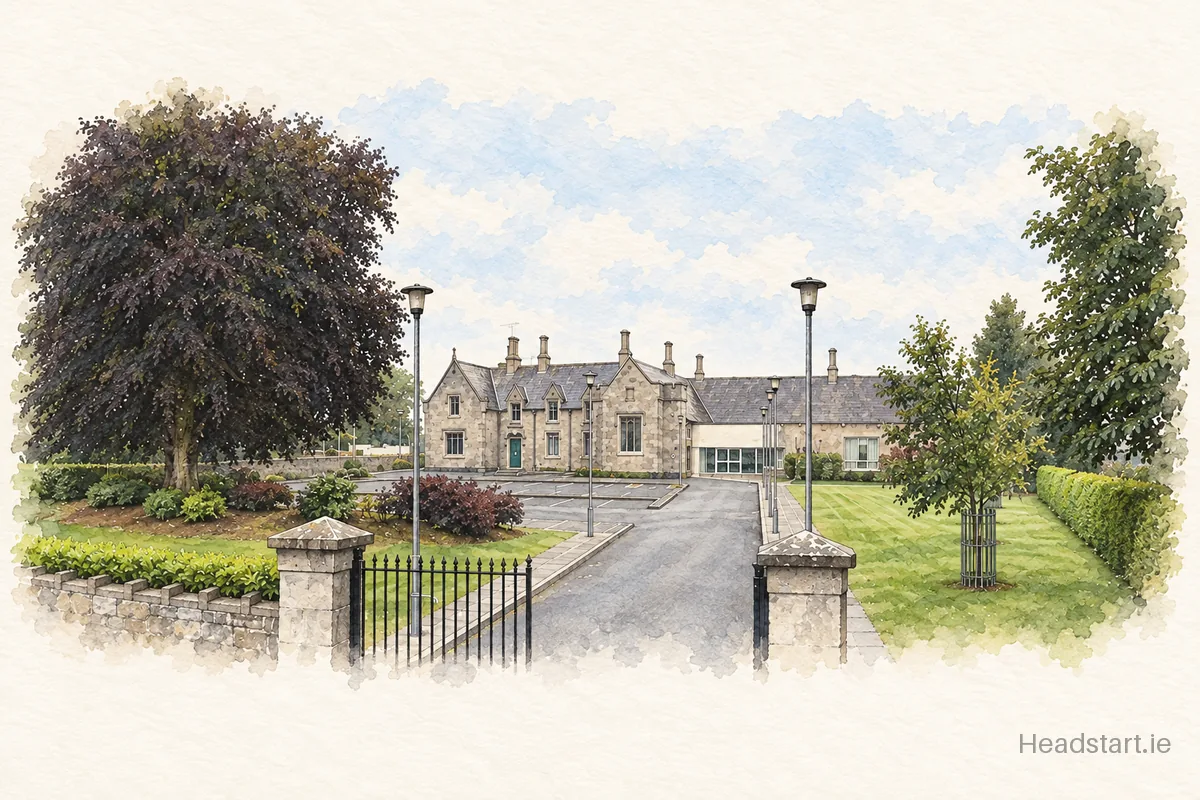
Boyne Community School, situated on the historic site of the former St Michael’s Diocesan School in Trim, serves a broad catchment area that includes the town and its hinterland. With an enrolment of over 950 post‑primary students and a thriving adult‑education programme, the school offers a comprehensive range of curricula, including the Junior Cycle, the Junior Cycle School Programme (JCSP), Transition Year, the Leaving Certificate, Leaving Certificate Vocational Programme (LCVP) and Leaving Certificate Applied. As a DEIS (Delivering Equality of Opportunity in Schools) school, it is committed to inclusive education and strives to provide the fullest possible range of post‑primary programmes to meet diverse learner needs. The school places a strong emphasis on community, respect, pride and belonging – encapsulated in its motto *Meas, Mórtas, Muintearas*. Recent EU‑funded investment under the National Recovery and Resilience Plan has equipped the library and specialist learning areas with digital devices, supporting learners at risk of educational disadvantage and enhancing digital literacy across the student body. Modernised facilities, a well‑resourced library, and dedicated spaces for L2LP and LCA students underpin a learning environment that balances academic rigour with personal, social, spiritual and moral development.
History
Boyne Community School was founded in 2001 following the amalgamation of St Michael’s Diocesan School and Trim Vocational School. The school occupies the former St Michael’s site, where existing buildings have been renovated and extended. It draws students from more than sixteen feeder primary schools and currently enrols over 950 pupils, alongside a successful adult‑education programme. The growth of Trim as a commuter town has increased demand for places, and the school is part of the Department of Education’s School Support Programme for educational inclusion (DEIS).
Applying to Boyne Community School
For a September 2027 place, a school's formal admissions process cannot begin before 1 October 2026. The school sets its own opening and closing dates in its annual admission notice.
National term dates 2026/27
View Boyne Community School's own calendar (2026/2027 school year)
Irish schools follow a standardised school year, so these nationwide post-primary school dates apply broadly to Boyne Community School. The school publishes its own calendar, linked above, and that is the authoritative source for its reopening date and discretionary closure days.
- October Mid-Term Break: Mon 26 Oct – Fri 30 Oct 2026
- Christmas Holidays: Wed 23 Dec 2026 – Tue 5 Jan 2027
- February Mid-Term Break: Mon 15 Feb – Fri 19 Feb 2027 (primary schools: Thu 18 Feb – Fri 19 Feb 2027)
- Easter Holidays: Mon 22 Mar – Sun 4 Apr 2027
Primary schools close for the last two days of the February mid-term week and may use discretionary days to take the full week, so their break can be shorter than post-primary schools'.
Frequently asked questions about Boyne Community School
How many pupils attend Boyne Community School?
Boyne Community School has 1,008 pupils enrolled, 238 girls and 770 boys. That makes it larger than the median Irish post-primary school, which has 585 pupils.
Is Boyne Community School a DEIS school?
Yes. Boyne Community School is part of DEIS, the Department of Education programme called Delivering Equality of Opportunity in Schools. DEIS schools serve communities at risk of educational disadvantage and receive additional supports, which can include smaller classes, extra teaching posts and funding for books and meals.
What is the ethos of Boyne Community School?
Boyne Community School has an Inter Denominational ethos. It is a mixed post-primary school.