
St Patrick's Classical School
Navan, Meath
Key facts
- Boys
- Pupils enrolled
- 967 larger than the median Irish post-primary school (585 pupils)
- Ethos
- Catholic
- Teaching through Irish
- No subjects taught through Irish
- Roll number
- 64350N the Department of Education reference for this school
School details
Location
About
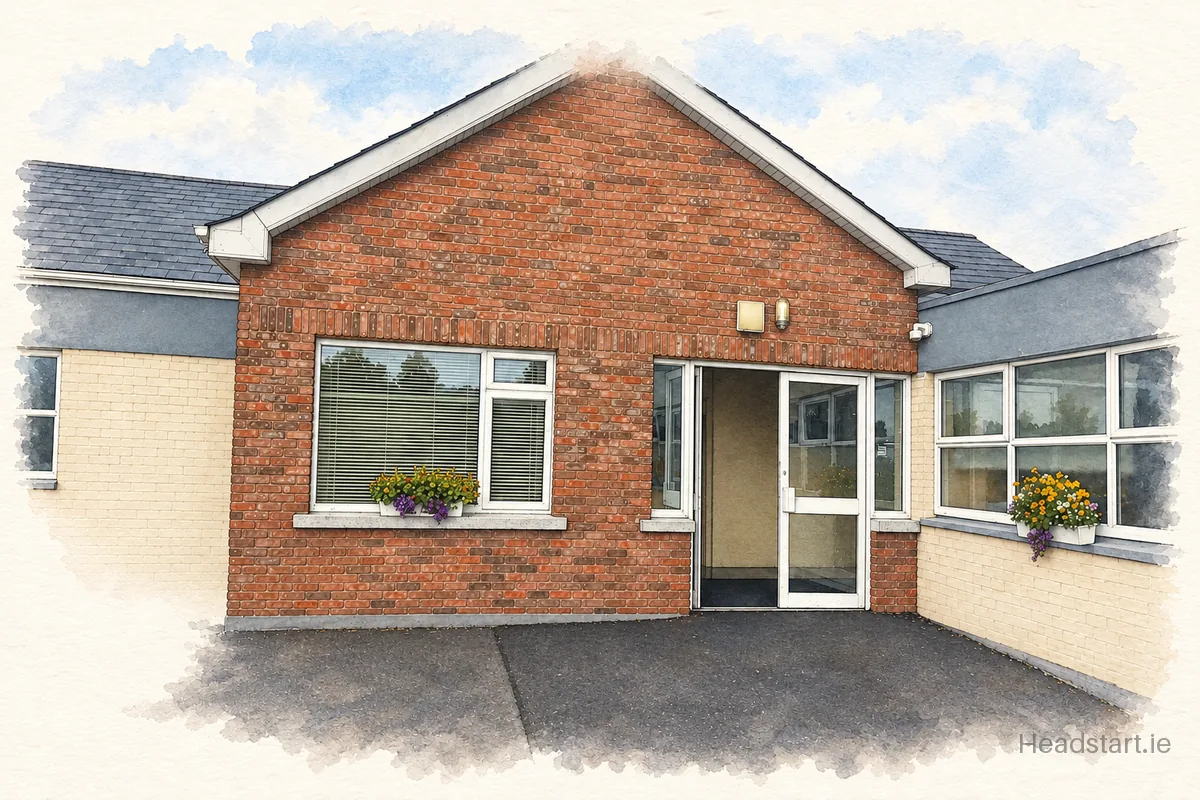
St. Patrick’s Classical School is a Catholic voluntary day school for boys, situated on a modern campus on the outskirts of Navan, County Meath. Founded in 1930 under the patronage of the Bishop of Meath, the school welcomes pupils of all abilities and backgrounds and delivers education in line with the highest traditions of Catholic schooling. The curriculum is broad and balanced, encompassing the Junior Cycle, Transition Year and the Leaving Certificate, and is designed to nurture spiritual, intellectual, emotional, social, cultural and moral development. The school places a strong emphasis on academic rigour while also promoting excellence in sport, drama, music and other extracurricular activities. Facilities include dedicated spaces for science, technology and the arts, as well as extensive sporting provisions that support a wide range of team and individual pursuits. A student council and various clubs encourage leadership and community involvement, reflecting the school’s commitment to developing well‑rounded individuals who can contribute positively to society.
History
St. Patrick’s Classical School opened its doors on 9 September 1930, continuing a legacy of diocesan education that began in Navan with St Finian’s College in 1802. The original study hall, built by Fr Power and nicknamed “Power’s Duck Egg”, formed the nucleus of the new school after Bishop Thomas Mulvany purchased the building to address the town’s lack of a classical secondary school for boys. The school was blessed by Bishop Mulvany and named St. Patrick’s Classical School, reflecting its focus on Latin, Greek and classical studies. In 1970 the school relocated to a purpose‑built campus on the town’s outskirts, where it continues to operate, now offering a comprehensive modern curriculum while retaining its classical heritage.
Applying to St Patrick's Classical School
For a September 2027 place, a school's formal admissions process cannot begin before 1 October 2026. The school sets its own opening and closing dates in its annual admission notice.
National term dates 2026/27
Irish schools follow a standardised school year, so these nationwide post-primary school dates apply broadly to St Patrick's Classical School. Individual schools set their own discretionary closure days, confirm exact dates with the school.
- October Mid-Term Break: Mon 26 Oct – Fri 30 Oct 2026
- Christmas Holidays: Wed 23 Dec 2026 – Tue 5 Jan 2027
- February Mid-Term Break: Mon 15 Feb – Fri 19 Feb 2027 (primary schools: Thu 18 Feb – Fri 19 Feb 2027)
- Easter Holidays: Mon 22 Mar – Sun 4 Apr 2027
Primary schools close for the last two days of the February mid-term week and may use discretionary days to take the full week, so their break can be shorter than post-primary schools'.
Frequently asked questions about St Patrick's Classical School
How many pupils attend St Patrick's Classical School?
St Patrick's Classical School has 967 pupils enrolled. That makes it larger than the median Irish post-primary school, which has 585 pupils.
Is St Patrick's Classical School a DEIS school?
No. St Patrick's Classical School is not part of DEIS, the Department of Education programme of additional supports for schools serving communities at risk of educational disadvantage. Not holding DEIS status says nothing about how good a school is, only about the profile of the community it serves.
What is the ethos of St Patrick's Classical School?
St Patrick's Classical School has a Catholic ethos. It is a boys' post-primary school.