
The Model School
Cavan
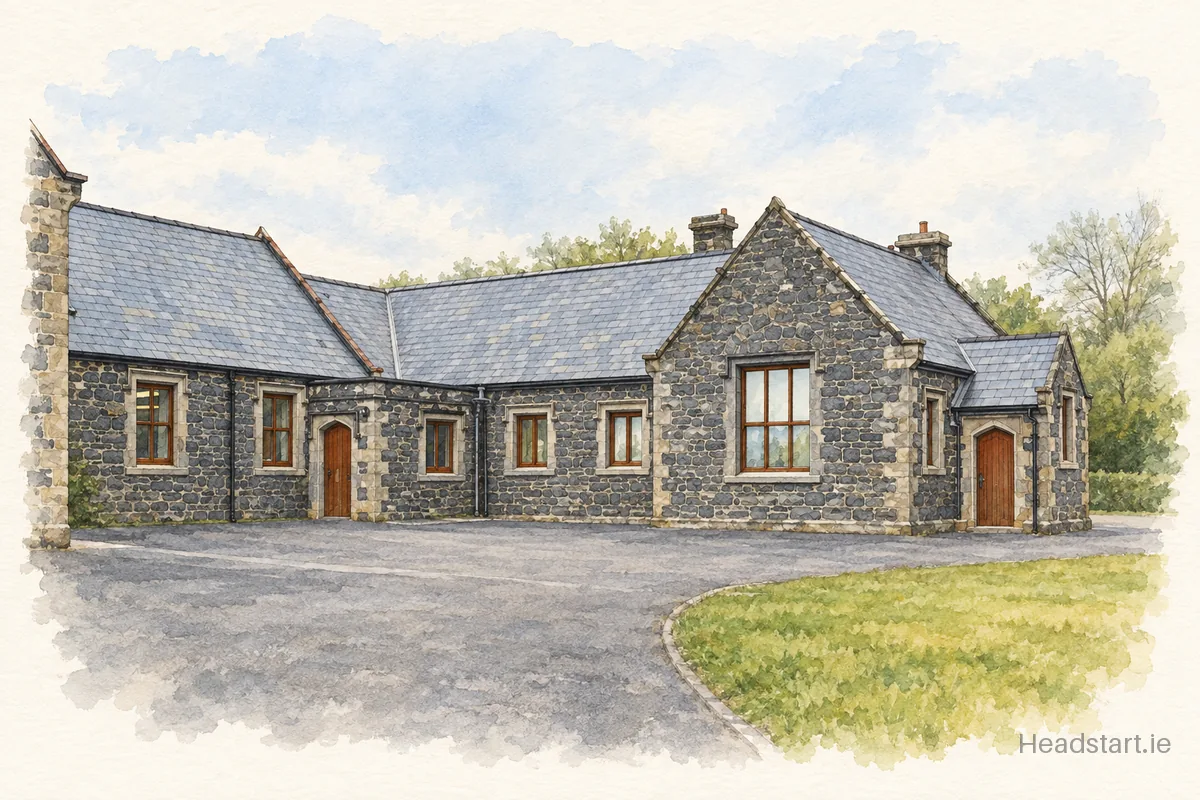
Key facts
- Mixed
- Pupils enrolled
- 83 smaller than the median Irish primary school (123 pupils)
- Girls and boys
- 47 girls, 36 boys
- Ethos
- Church Of Ireland
- Teaching through Irish
- No subjects through Irish
- Roll number
- 05627W the Department of Education reference for this school
School details
Location
About
The Model National School is a small, vibrant rural primary school operating under Protestant patronage, primarily serving the local Protestant community. It provides a safe and secure learning environment that nurtures pupils’ spiritual, intellectual, emotional and social development. With a dedicated team of five teachers, including four mainstream class teachers and a specialist in Special Educational Needs (S.E.N.), the school is supported by a full‑time Special Needs Assistant, a part‑time assistant, a caretaker and a secretary, ensuring personalised attention for children of varying abilities and needs. The curriculum follows the Irish Primary Curriculum, covering English, Irish, Mathematics, History, Geography, Science (S.E.S.E.), Social, Personal & Health Education, Music, Drama, Arts & Crafts and Physical Education. A broad extracurricular programme complements academic learning: pupils take part in dance, gymnastics and soccer/GAA throughout the year, learn tin whistle from 1st to 6th class, may choose fiddle/violin lessons in 3rd‑6th class, and receive swimming instruction in the upper classes. The presence of specialist S.E.N. staff and assistants highlights the school’s commitment to inclusive education and to supporting every child in reaching their full potential.
History
The concept of a “Model School” originated in 1831 as part of a national effort to train teachers for Ireland’s new national schools, with non‑denominational model schools established in Dublin. Expansion began in 1834 and between 1848 and 1857 similar schools were built across the country, including the Model School in Bailieborough, which officially opened on 7 May 1849. Sir John Young, Lord Lisgar, provided the site and financing, and the school initially operated as a fee‑paying institution catering to both academic and vocational abilities. From the late 1950s it functioned as a Central School serving a wide catchment area, primarily for Protestant children. The 1870 Royal Commission recommended that model schools be converted to ordinary nationally managed schools, with teacher training moving to residential colleges and model schools used solely for teaching practice.
Applying to The Model School
For a September 2027 place, a school's formal admissions process cannot begin before 1 October 2026. The school sets its own opening and closing dates in its annual admission notice.
National term dates 2026/27
Irish schools follow a standardised school year, so these nationwide primary school dates apply broadly to The Model School. Individual schools set their own discretionary closure days, confirm exact dates with the school.
- October Mid-Term Break: Mon 26 Oct – Fri 30 Oct 2026
- Christmas Holidays: Wed 23 Dec 2026 – Tue 5 Jan 2027
- February Mid-Term Break: Thu 18 Feb – Fri 19 Feb 2027 (post-primary schools: Mon 15 Feb – Fri 19 Feb 2027)
- Easter Holidays: Mon 22 Mar – Sun 4 Apr 2027
Primary schools close for the last two days of the February mid-term week and may use discretionary days to take the full week, so their break can be shorter than post-primary schools'.
Frequently asked questions about The Model School
How many pupils attend The Model School?
The Model School has 83 pupils enrolled, 47 girls and 36 boys. That makes it smaller than the median Irish primary school, which has 123 pupils.
Is The Model School a DEIS school?
No. The Model School is not part of DEIS, the Department of Education programme of additional supports for schools serving communities at risk of educational disadvantage. Not holding DEIS status says nothing about how good a school is, only about the profile of the community it serves.
What is the ethos of The Model School?
The Model School has a Church Of Ireland ethos. It is a mixed primary school.