
Synge Street Primary School
Dublin 8, Dublin
Key facts
- DEIS
- Some Irish-medium
- Mixed
- Pupils enrolled
- 103 smaller than the median Irish primary school (123 pupils)
- Girls and boys
- 40 girls, 63 boys
- Ethos
- Catholic
- Teaching through Irish
- Some subjects through Irish
- Roll number
- 17893N the Department of Education reference for this school
School details
Location
About
Bunscoil Synge Street is a mixed‑gender primary school situated on Synge Street in Dublin 8. Since September 2017 the school has operated a full Irish‑medium stream – the Sruth Lán Ghaeilge – which welcomes boys and girls from the early years (Naíonáin Bheaga) through to the end of primary education, delivering the curriculum entirely through Gaeilge. In addition, the school provides English‑medium classes for boys in the upper years (4th‑6th class), ensuring a flexible offering that meets the needs of the local community. The school places a strong emphasis on creating a positive, trusting and secure environment where each child’s individuality is respected. Diversity is celebrated, with half of the families coming from overseas backgrounds such as India, Bangladesh and China, and the school’s ethos promotes inclusivity, innovation and holistic development. A vibrant co‑curricular programme includes sports, a Green School committee, a school band called “The Syngers”, and a dedicated play‑therapist and well‑being team, all of which contribute to a lively, supportive atmosphere for learning and personal growth.
History
The origins of Bunscoil Synge Street date back to 1864 when the Synge Street schools first opened on Monday 11 May 1864. A mass was celebrated in the Oratory to bless the new monastery and school, and the Lord Mayor, Paul McSwiney, enrolled his son as the first pupil. By 7 July 1864 the school accommodated 604 boys across four large classrooms and one small room. In 1954 a new primary school building was inaugurated, serving a combined enrolment of 1,430 pupils in both primary and secondary sections. Historical records extend to the 1920s, and former pupils (“old boys”) continue to maintain a connection with the school, visiting from locations as far as Argentina and Australia.
Applying to Synge Street Primary School
For a September 2027 place, a school's formal admissions process cannot begin before 1 October 2026. The school sets its own opening and closing dates in its annual admission notice.
National term dates 2026/27
View Synge Street Primary School's own calendar (2026/2027 school year)
Irish schools follow a standardised school year, so these nationwide primary school dates apply broadly to Synge Street Primary School. The school publishes its own calendar, linked above, and that is the authoritative source for its reopening date and discretionary closure days.
- October Mid-Term Break: Mon 26 Oct – Fri 30 Oct 2026
- Christmas Holidays: Wed 23 Dec 2026 – Tue 5 Jan 2027
- February Mid-Term Break: Thu 18 Feb – Fri 19 Feb 2027 (post-primary schools: Mon 15 Feb – Fri 19 Feb 2027)
- Easter Holidays: Mon 22 Mar – Sun 4 Apr 2027
Primary schools close for the last two days of the February mid-term week and may use discretionary days to take the full week, so their break can be shorter than post-primary schools'.
Frequently asked questions about Synge Street Primary School
How many pupils attend Synge Street Primary School?
Synge Street Primary School has 103 pupils enrolled, 40 girls and 63 boys. That makes it smaller than the median Irish primary school, which has 123 pupils.
Is Synge Street Primary School a DEIS school?
Yes. Synge Street Primary School is part of DEIS, the Department of Education programme called Delivering Equality of Opportunity in Schools. DEIS schools serve communities at risk of educational disadvantage and receive additional supports, which can include smaller classes, extra teaching posts and funding for books and meals.
Does Synge Street Primary School teach through Irish?
Partly. Synge Street Primary School teaches some subjects through Irish.
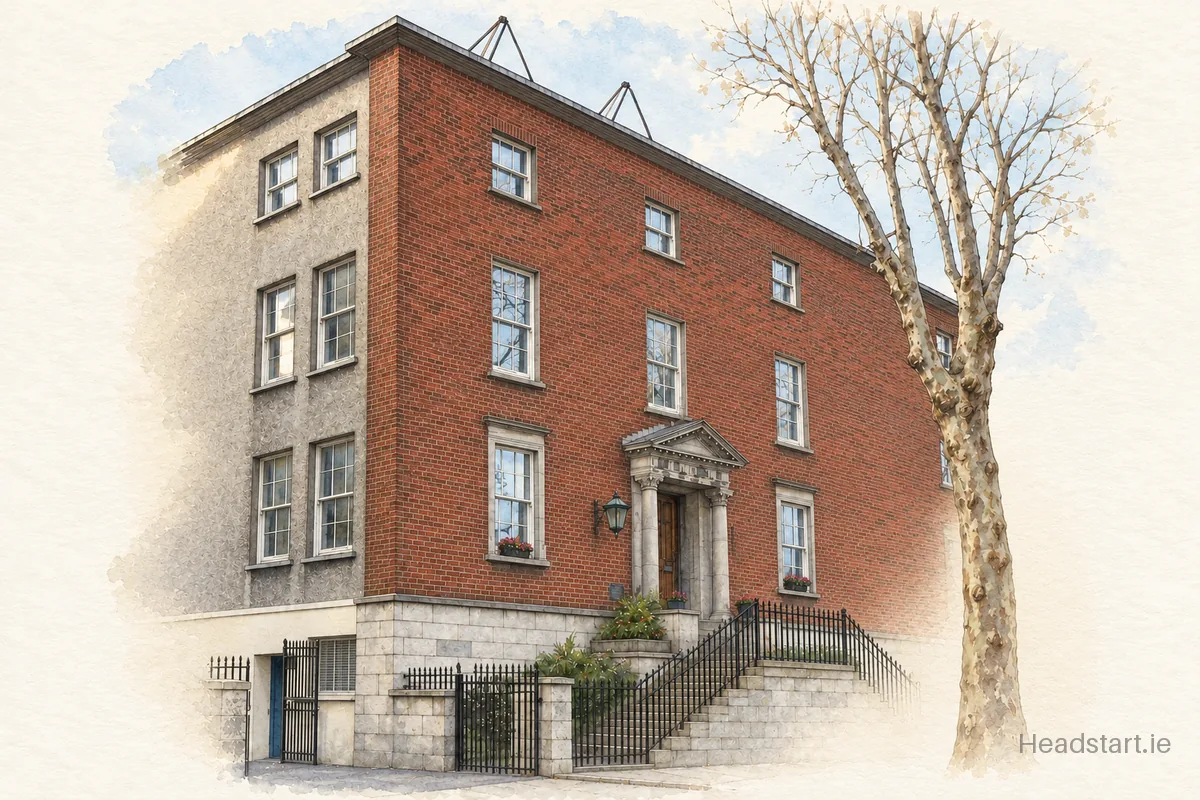
Illustration based on a photo by Fob.schools. Photo and adapted illustration: CC BY-SA 4.0.