
St. Patrick's College
Killala, Mayo
Key facts
- DEIS
- Mixed
- Pupils enrolled
- 181 smaller than the median Irish post-primary school (585 pupils)
- Girls and boys
- 76 girls, 105 boys
- Ethos
- Multi Denominational
- Teaching through Irish
- No subjects taught through Irish
- Roll number
- 72130S the Department of Education reference for this school
School details
Location
About
St Patrick’s College, Lacken Cross is a small, vibrant co‑educational secondary school operating under the Mayo, Sligo and Leitrim Education and Training Board. The college delivers a broad curriculum from first year through to the Leaving Certificate, placing equal emphasis on academic achievement and the holistic development of each pupil. Modern, state‑of‑the‑art classrooms and specialist teaching spaces – including dedicated areas for art, science, technology and computing – support a contemporary learning environment, while a well‑equipped physical‑education facility and a spacious canteen cater to students’ wider needs. The school benefits from favourable pupil‑teacher ratios, enabling personalised support and strong relationships between staff and learners. A welcoming, inclusive atmosphere is reinforced by an open‑door policy for parents and a commitment to fostering teamwork through a wide range of extracurricular activities, notably in sport and music. Consistently strong examination results across a diverse subject offering reflect the college’s focus on high‑quality teaching and the ambition of its student body.
History
St Patrick’s College opened in 1966 in response to demand from the local farming community, with land donated by Mr James Massey. Initially comprising six rooms and a single classroom, the school expanded with the construction of an old hall in the mid‑1970s. A major extension added new classrooms in 1993, and in 2008 the current school building was inaugurated, providing modern facilities and technology suites. The curriculum grew from the Group Certificate to include the Leaving Certificate in 1973, with an expanding range of subjects, particularly in the sciences. Situated about four miles from Killala and five miles from Ballycastle, the college serves a catchment radius of up to fifteen miles, offering co‑educational secondary education for students of all abilities and backgrounds.
Applying to St. Patrick's College
For a September 2027 place, a school's formal admissions process cannot begin before 1 October 2026. The school sets its own opening and closing dates in its annual admission notice.
National term dates 2026/27
Irish schools follow a standardised school year, so these nationwide post-primary school dates apply broadly to St. Patrick's College. Individual schools set their own discretionary closure days, confirm exact dates with the school.
- October Mid-Term Break: Mon 26 Oct – Fri 30 Oct 2026
- Christmas Holidays: Wed 23 Dec 2026 – Tue 5 Jan 2027
- February Mid-Term Break: Mon 15 Feb – Fri 19 Feb 2027 (primary schools: Thu 18 Feb – Fri 19 Feb 2027)
- Easter Holidays: Mon 22 Mar – Sun 4 Apr 2027
Primary schools close for the last two days of the February mid-term week and may use discretionary days to take the full week, so their break can be shorter than post-primary schools'.
Frequently asked questions about St. Patrick's College
How many pupils attend St. Patrick's College?
St. Patrick's College has 181 pupils enrolled, 76 girls and 105 boys. That makes it smaller than the median Irish post-primary school, which has 585 pupils.
Is St. Patrick's College a DEIS school?
Yes. St. Patrick's College is part of DEIS, the Department of Education programme called Delivering Equality of Opportunity in Schools. DEIS schools serve communities at risk of educational disadvantage and receive additional supports, which can include smaller classes, extra teaching posts and funding for books and meals.
What is the ethos of St. Patrick's College?
St. Patrick's College has a Multi Denominational ethos. It is a mixed post-primary school.
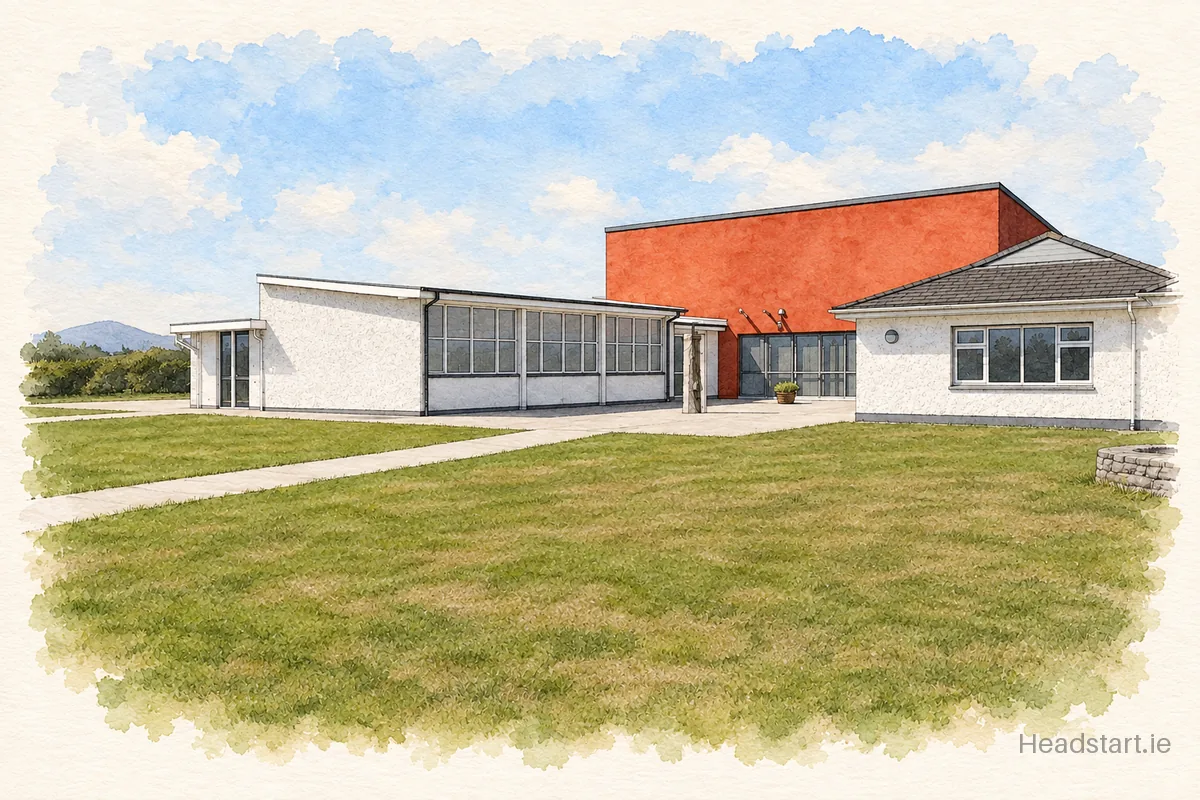
Illustration based on a photo by Oliver Dixon. Photo and adapted illustration: CC BY-SA 2.0.