
St Olafs National School
Dundrum, Dublin
Key facts
- Mixed
- Pupils enrolled
- 591 larger than the median Irish primary school (123 pupils)
- Girls and boys
- 284 girls, 307 boys
- Ethos
- Catholic
- Teaching through Irish
- No subjects through Irish
- Roll number
- 19319O the Department of Education reference for this school
School details
Location
About
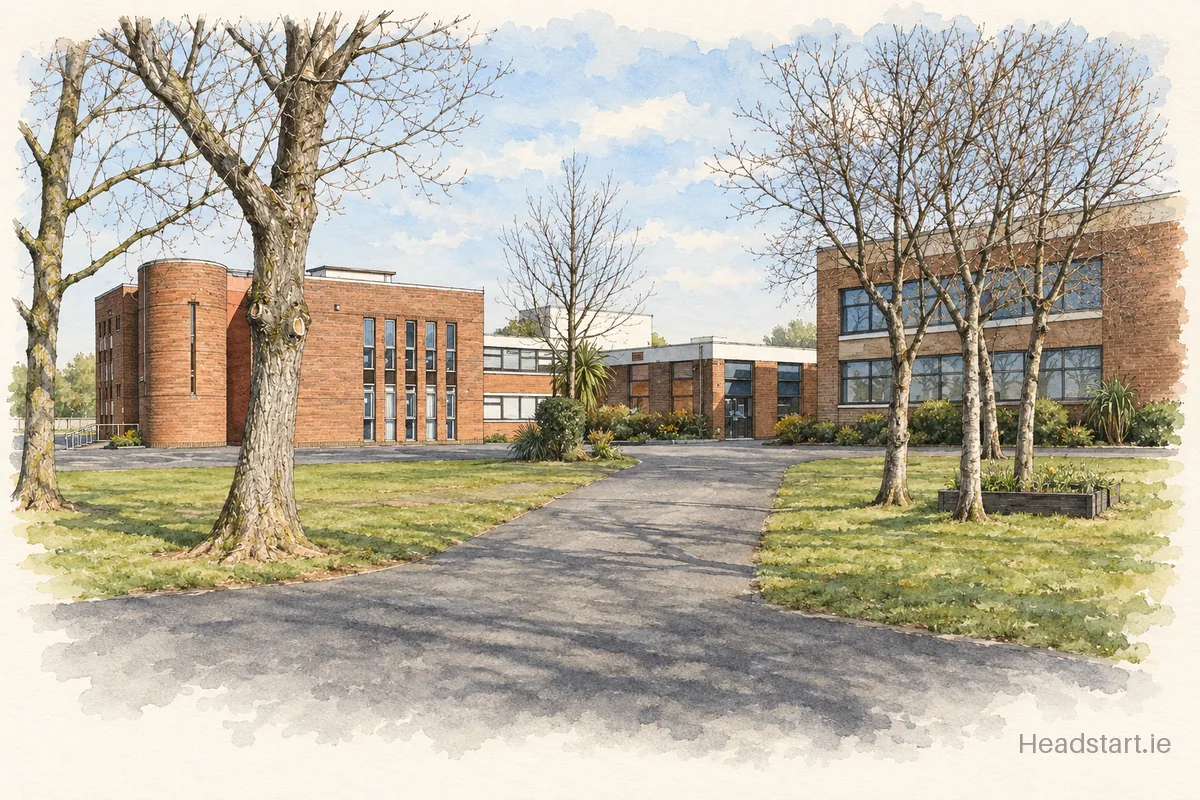
St. Olaf’s National School is a co‑educational, vertical primary school catering for Junior Infants through to 6th Class, with an enrolment of over 500 pupils. The school provides a Catholic ethos while recognising and respecting all other faiths and non‑faith backgrounds, creating a caring, happy and secure atmosphere that supports the intellectual, spiritual, physical, moral and cultural development of every child. A dedicated team of more than 40 staff members, including special needs assistants, work collaboratively with a strong Parents’ Association and the wider parish community to place pupils’ interests at the centre of all activities. The school boasts a range of facilities that support both academic and extra‑curricular pursuits. A modern PE hall, a substantial 2010 extension and forthcoming new classrooms provide ample space for teaching, sport and community events. The hall also serves as a venue for local groups such as scouts, guides, musical societies and the parish youth band. A vibrant programme of voluntary activities includes soccer, Gaelic football, hurling, camogie, tag rugby, basketball, chess, tennis, athletics, unihock, choir and many other clubs, reflecting the school’s commitment to holistic education and the development of pupils’ talents and confidence.
History
St. Olaf’s National School opened its doors on 2 September 1968 in a prefab, welcoming an initial cohort of 33 boys and girls under the leadership of its first principal. Rapid growth led to a dual‑day schedule and, in 1973, the separate boys’ and girls’ schools were officially opened by Archbishop Dermot Ryan and Minister for Education Richard Burke, each with eight classrooms and shared access to the PE hall. Following changes to Department of Education rules, the two schools merged into a mixed school in the mid‑1970s. Over the ensuing decades the school expanded its facilities, with the hall serving as a community centre and the construction of a new extension in 2010 to accommodate a current enrolment of around 530 pupils. In June 2021 the long‑serving principal retired and Mr John Murtagh assumed the role, and recent approval for four additional classrooms promises further growth.
Applying to St Olafs National School
For a September 2027 place, a school's formal admissions process cannot begin before 1 October 2026. The school sets its own opening and closing dates in its annual admission notice.
National term dates 2026/27
Irish schools follow a standardised school year, so these nationwide primary school dates apply broadly to St Olafs National School. Individual schools set their own discretionary closure days, confirm exact dates with the school.
- October Mid-Term Break: Mon 26 Oct – Fri 30 Oct 2026
- Christmas Holidays: Wed 23 Dec 2026 – Tue 5 Jan 2027
- February Mid-Term Break: Thu 18 Feb – Fri 19 Feb 2027 (post-primary schools: Mon 15 Feb – Fri 19 Feb 2027)
- Easter Holidays: Mon 22 Mar – Sun 4 Apr 2027
Primary schools close for the last two days of the February mid-term week and may use discretionary days to take the full week, so their break can be shorter than post-primary schools'.
Frequently asked questions about St Olafs National School
How many pupils attend St Olafs National School?
St Olafs National School has 591 pupils enrolled, 284 girls and 307 boys. That makes it larger than the median Irish primary school, which has 123 pupils.
Is St Olafs National School a DEIS school?
No. St Olafs National School is not part of DEIS, the Department of Education programme of additional supports for schools serving communities at risk of educational disadvantage. Not holding DEIS status says nothing about how good a school is, only about the profile of the community it serves.
What is the ethos of St Olafs National School?
St Olafs National School has a Catholic ethos. It is a mixed primary school.