
St. Fursey's National School
Haggardstown, Louth
Key facts
- Mixed
- Pupils enrolled
- 229 larger than the median Irish primary school (123 pupils)
- Girls and boys
- 125 girls, 104 boys
- Ethos
- Catholic
- Teaching through Irish
- No subjects through Irish
- Roll number
- 17550G the Department of Education reference for this school
School details
Location
About
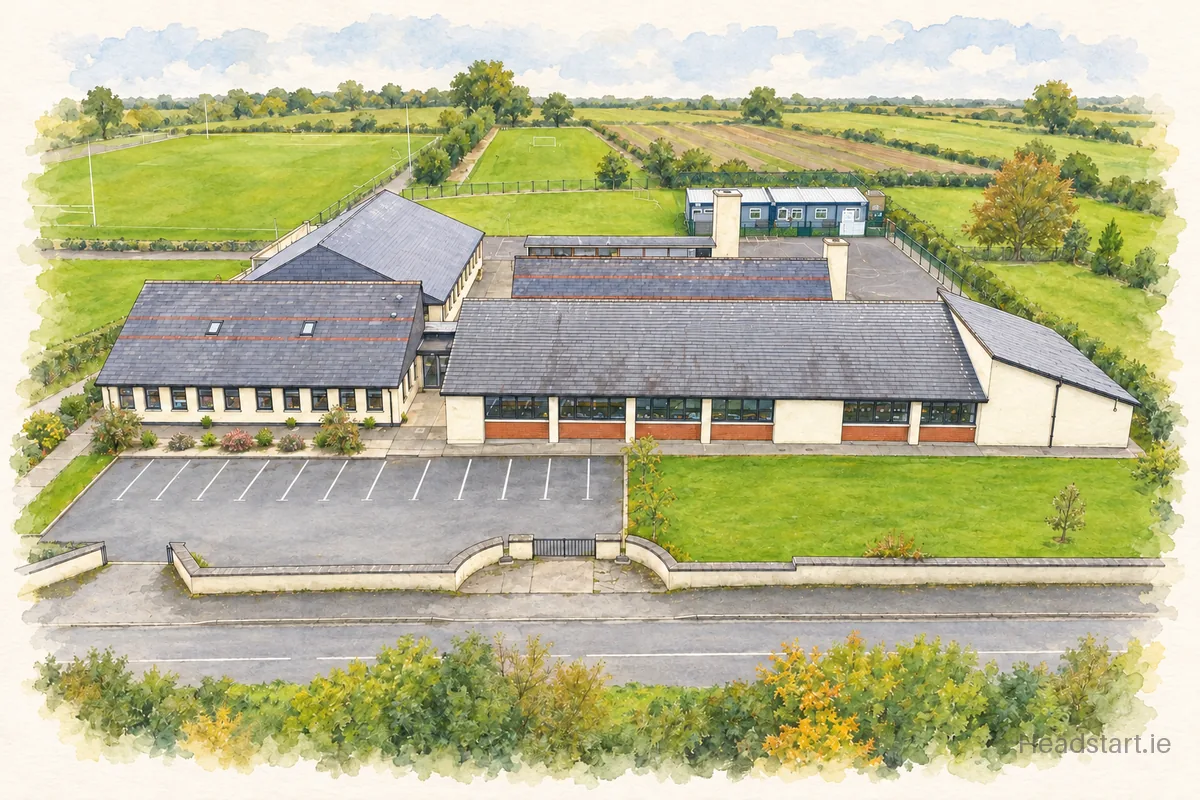
St. Fursey’s National School is a vibrant primary school situated on Marlbog Road in Haggardstown, Dundalk. The school embraces a Catholic ethos while fostering an inclusive, welcoming environment that celebrates diversity of race, culture, religion, gender and ability. Its educational philosophy centres on the holistic development of each child, nurturing spiritual, moral, cognitive, emotional, imaginative, aesthetic, social and physical growth. The curriculum follows the 1999 Revised Curriculum, encouraging pupils to become confident, caring citizens equipped for a modern, multicultural and digitally literate society. The campus combines historic charm with contemporary facilities. Recent developments include four state‑of‑the‑art classrooms added in 2007/2008 and a dedicated Autism classroom opened in 2018, providing specialised support for pupils with special educational needs. The school’s warm, friendly atmosphere is reinforced by strong home‑school links, active parental involvement and a commitment to environmental awareness. Extracurricular activities, community events and a vibrant parish partnership further enrich the learning experience, ensuring every child feels valued and known by name.
History
St. Fursey’s National School originated in 1840 within the Old Masshouse on Mullaharlin Road, initially comprising two small classrooms and known as Mullaharlin National School. In 1940 the school relocated to its present Marlbog Road site and was renamed after the parish patron saint, St. Fursey, who is believed to have founded a monastery locally. An extension opened by Minister Mary O’Rourke in 1987 added six new classrooms. A major refurbishment in the 2007/2008 academic year introduced four modern classrooms, and in 2018 an Autism classroom was added to broaden inclusive provision. The school has maintained a relatively stable size over the past two decades while the surrounding community has transitioned from a rural setting to a growing suburban area of Dundalk.
Applying to St. Fursey's National School
For a September 2027 place, a school's formal admissions process cannot begin before 1 October 2026. The school sets its own opening and closing dates in its annual admission notice.
National term dates 2026/27
Irish schools follow a standardised school year, so these nationwide primary school dates apply broadly to St. Fursey's National School. Individual schools set their own discretionary closure days, confirm exact dates with the school.
- October Mid-Term Break: Mon 26 Oct – Fri 30 Oct 2026
- Christmas Holidays: Wed 23 Dec 2026 – Tue 5 Jan 2027
- February Mid-Term Break: Thu 18 Feb – Fri 19 Feb 2027 (post-primary schools: Mon 15 Feb – Fri 19 Feb 2027)
- Easter Holidays: Mon 22 Mar – Sun 4 Apr 2027
Primary schools close for the last two days of the February mid-term week and may use discretionary days to take the full week, so their break can be shorter than post-primary schools'.
Frequently asked questions about St. Fursey's National School
How many pupils attend St. Fursey's National School?
St. Fursey's National School has 229 pupils enrolled, 125 girls and 104 boys. That makes it larger than the median Irish primary school, which has 123 pupils.
Is St. Fursey's National School a DEIS school?
No. St. Fursey's National School is not part of DEIS, the Department of Education programme of additional supports for schools serving communities at risk of educational disadvantage. Not holding DEIS status says nothing about how good a school is, only about the profile of the community it serves.
What is the ethos of St. Fursey's National School?
St. Fursey's National School has a Catholic ethos. It is a mixed primary school.