
Scoil Pól
Limerick
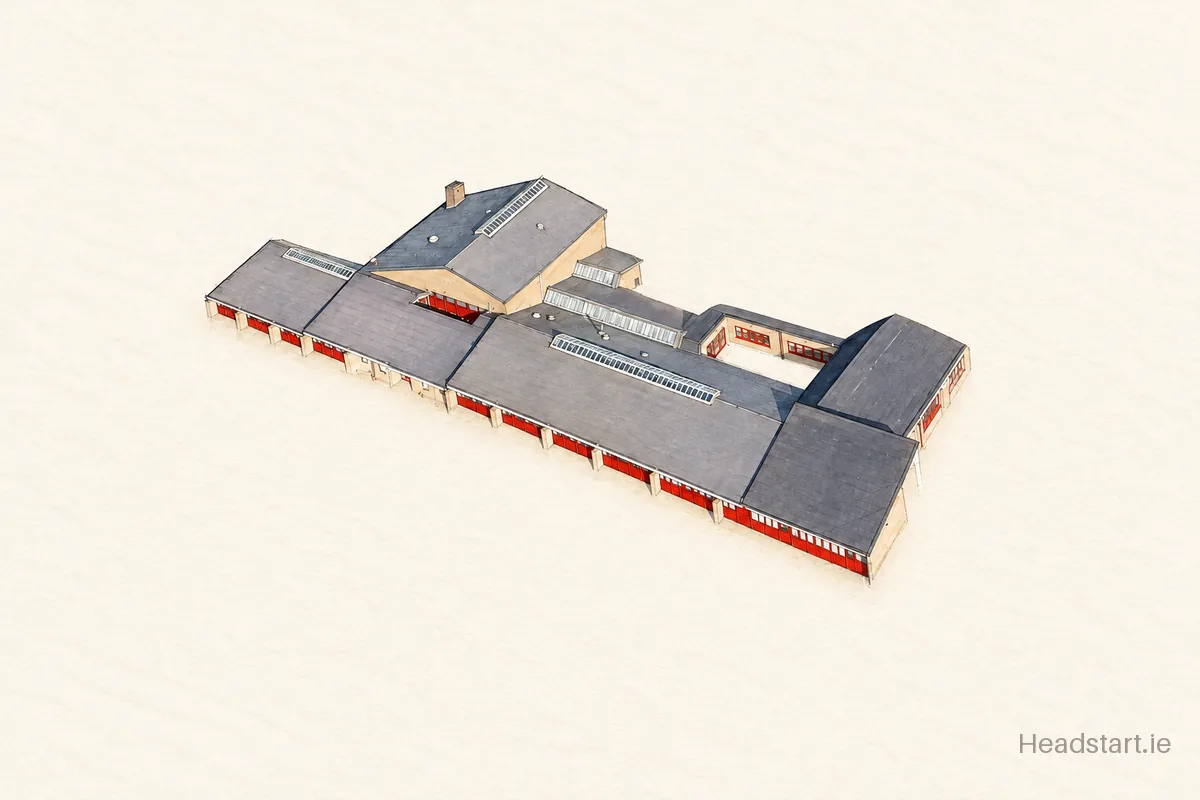
Key facts
- Mixed
- Pupils enrolled
- 715 larger than the median Irish post-primary school (585 pupils)
- Girls and boys
- 365 girls, 350 boys
- Ethos
- Catholic
- Teaching through Irish
- No subjects taught through Irish
- Roll number
- 64130W the Department of Education reference for this school
School details
Location
About
Scoil Pól is a voluntary Catholic secondary school in Kilfinane, County Limerick, operating under the trusteeship of the Le Chéile Trust. The school delivers an inclusive, broadly based education that balances academic rigour with personal, social, vocational and spiritual development. Its curriculum follows the national framework, offering Junior Cycle, Senior Cycle, Transition Year, Leaving Certificate Vocational Programme (LCVP) and a dedicated hub for inclusion and extra‑curricular activities such as music, drama, debate and a wide range of sports. The ethos of mutual trust and respect underpins a community‑spirit that encourages students to develop the whole person, not merely academic achievement. The campus has expanded significantly in recent years. A 2024 twelve‑room Block A added modern facilities including a music room, art studio, science/chemistry laboratory, preparation room and chemical store, together with eight new classrooms. Earlier extensions introduced a specialist Special Needs Unit (with sensory and daily‑living rooms), a construction studies suite, a library and an IT suite containing 29 computer terminals. These state‑of‑the‑art resources support a diverse learner population and reinforce the school’s commitment to inclusive, forward‑looking education.
History
Scoil Pól was founded in 1915 as a secondary school for girls, originally housed in a convent with boarding facilities and preparing pupils for Oxford and Cambridge examinations. Early premises included a basement room, a national school room and a movable tin shed. In 1926 the Arus Pól building, containing four classrooms and two music rooms, was erected, followed by the Arus Bride building in the late 1940s. The school became co‑educational in 1968 and opened a new secondary school building in 1987. Subsequent developments added a library, IT and DCG rooms in 2005; a Special Needs Unit and construction studies facilities in 2019; and a twelve‑room Block A with specialised labs and arts spaces in 2024. Throughout, the school has maintained a strong link to its Catholic heritage while adapting to evolving educational needs.
Applying to Scoil Pól
For a September 2027 place, a school's formal admissions process cannot begin before 1 October 2026. The school sets its own opening and closing dates in its annual admission notice.
National term dates 2026/27
View Scoil Pól's own calendar (2026/2027 school year)
Irish schools follow a standardised school year, so these nationwide post-primary school dates apply broadly to Scoil Pól. The school publishes its own calendar, linked above, and that is the authoritative source for its reopening date and discretionary closure days.
- October Mid-Term Break: Mon 26 Oct – Fri 30 Oct 2026
- Christmas Holidays: Wed 23 Dec 2026 – Tue 5 Jan 2027
- February Mid-Term Break: Mon 15 Feb – Fri 19 Feb 2027 (primary schools: Thu 18 Feb – Fri 19 Feb 2027)
- Easter Holidays: Mon 22 Mar – Sun 4 Apr 2027
Primary schools close for the last two days of the February mid-term week and may use discretionary days to take the full week, so their break can be shorter than post-primary schools'.
Frequently asked questions about Scoil Pól
How many pupils attend Scoil Pól?
Scoil Pól has 715 pupils enrolled, 365 girls and 350 boys. That makes it larger than the median Irish post-primary school, which has 585 pupils.
Is Scoil Pól a DEIS school?
No. Scoil Pól is not part of DEIS, the Department of Education programme of additional supports for schools serving communities at risk of educational disadvantage. Not holding DEIS status says nothing about how good a school is, only about the profile of the community it serves.
What is the ethos of Scoil Pól?
Scoil Pól has a Catholic ethos. It is a mixed post-primary school.