
Scoil Naomh Padraig Boys Senior School
Mallow, Cork
Key facts
- Boys
- Pupils enrolled
- 212 larger than the median Irish primary school (123 pupils)
- Ethos
- Catholic
- Teaching through Irish
- No subjects through Irish
- Roll number
- 17887S the Department of Education reference for this school
School details
About
St. Patrick’s Boys’ National School, Mallow, is a Catholic primary school for boys from 1st to 6th class, including two dedicated ASD (Autism Spectrum Disorder) classes. The school describes itself as inclusive and welcoming, aiming to nurture each pupil’s full potential through a holistic approach that balances academic rigour with personal development, wellbeing and community involvement. A strong partnership with parents, the Board of Management and the Parents Association underpins a supportive environment where children feel valued and motivated to learn. The curriculum is broad, encompassing core subjects such as maths, science and visual arts alongside a rich programme of sports (football, hurling, tag rugby, orienteering), music, drama and Irish language activities. Extra‑curricular initiatives include healthy‑eating policies, substance‑abuse education, litter‑awareness, charitable projects (Bóthar, local charities) and regular educational tours. Facilities reinforce this varied offering: interactive whiteboards in every classroom, a well‑equipped computer room, a recently renovated library, a dedicated learning‑support room, a cookery area, a PE hall, two grass pitches and a school garden.
History
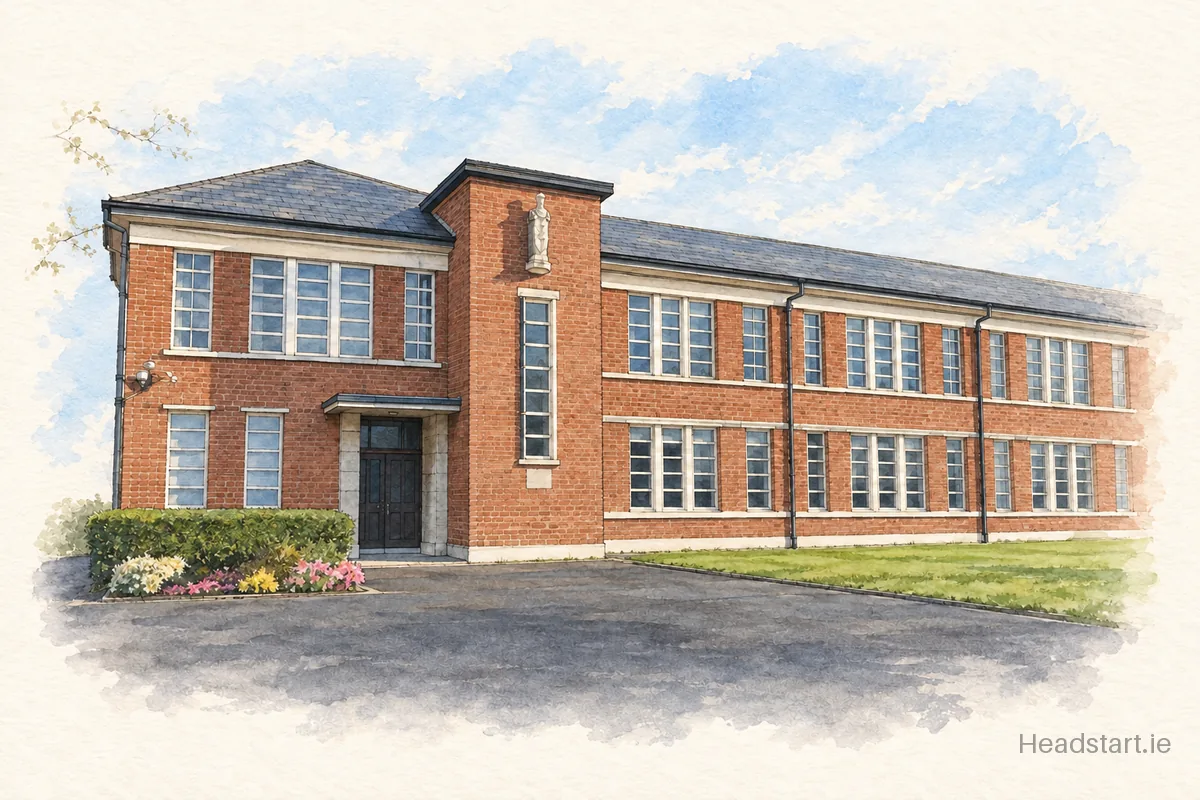
The Patrician Brothers were invited to Mallow by Bishop McCarthy in 1879 to establish a Catholic school for boys, taking over a building originally intended for the Christian Brothers. The school, initially known as Mallow Monastery National School, grew rapidly and outgrew its premises by the early 1950s. Construction of the present school began in September 1952 and was completed in June 1954, costing £64,191 from the Department of Education plus local contributions. The new building was blessed on 1 July 1954 by Bishop John Roche and officially opened by the Department of Education’s Secretary, with TD Sean Moylan in attendance. Teaching commenced on 18 October 1954 with an enrolment of 581 pupils and twelve teachers. Subsequent acquisition of adjoining fields provided extensive playing grounds for the school.
Applying to Scoil Naomh Padraig Boys Senior School
For a September 2027 place, a school's formal admissions process cannot begin before 1 October 2026. The school sets its own opening and closing dates in its annual admission notice.
National term dates 2026/27
Irish schools follow a standardised school year, so these nationwide primary school dates apply broadly to Scoil Naomh Padraig Boys Senior School. Individual schools set their own discretionary closure days, confirm exact dates with the school.
- October Mid-Term Break: Mon 26 Oct – Fri 30 Oct 2026
- Christmas Holidays: Wed 23 Dec 2026 – Tue 5 Jan 2027
- February Mid-Term Break: Thu 18 Feb – Fri 19 Feb 2027 (post-primary schools: Mon 15 Feb – Fri 19 Feb 2027)
- Easter Holidays: Mon 22 Mar – Sun 4 Apr 2027
Primary schools close for the last two days of the February mid-term week and may use discretionary days to take the full week, so their break can be shorter than post-primary schools'.
Frequently asked questions about Scoil Naomh Padraig Boys Senior School
How many pupils attend Scoil Naomh Padraig Boys Senior School?
Scoil Naomh Padraig Boys Senior School has 212 pupils enrolled. That makes it larger than the median Irish primary school, which has 123 pupils.
Is Scoil Naomh Padraig Boys Senior School a DEIS school?
No. Scoil Naomh Padraig Boys Senior School is not part of DEIS, the Department of Education programme of additional supports for schools serving communities at risk of educational disadvantage. Not holding DEIS status says nothing about how good a school is, only about the profile of the community it serves.
What is the ethos of Scoil Naomh Padraig Boys Senior School?
Scoil Naomh Padraig Boys Senior School has a Catholic ethos. It is a boys' primary school.