
Marino College
Fairview, Dublin
Key facts
- DEIS
- Mixed
- Pupils enrolled
- 297 smaller than the median Irish post-primary school (585 pupils)
- Girls and boys
- 143 girls, 154 boys
- Ethos
- Multi Denominational
- Teaching through Irish
- No subjects taught through Irish
- Roll number
- 70250S the Department of Education reference for this school
School details
Location
About
Marino College is a second‑level institution situated in Fairview, Dublin, offering a comprehensive range of programmes from the Junior Cycle through to the Senior Cycle, including Transition Year, the traditional Leaving Certificate, Leaving Certificate Applied and a range of post‑leaving‑certificate courses through its Further Education provision. The school’s ethos centres on “Enabling, Enhancing, Educating”, with a strong emphasis on technical and digital learning. Students benefit from a modern iPad programme, a dedicated P‑TECH pathway, and a newly‑opened Digital Maker Space (2020) that supports hands‑on innovation in IT, engineering and media. The campus is well‑equipped with specialised facilities: a science laboratory, woodwork and metalwork workshops, a home economics suite, music and art rooms, a fully‑stocked library, and a large PE hall. Partnerships with local businesses and technology partners such as Google, Virgin Media and Smartbox enrich the curriculum and provide real‑world experience. A vibrant extracurricular programme includes sports, clubs, cultural festivals and a strong choral tradition, fostering a well‑rounded education for all pupils.
History
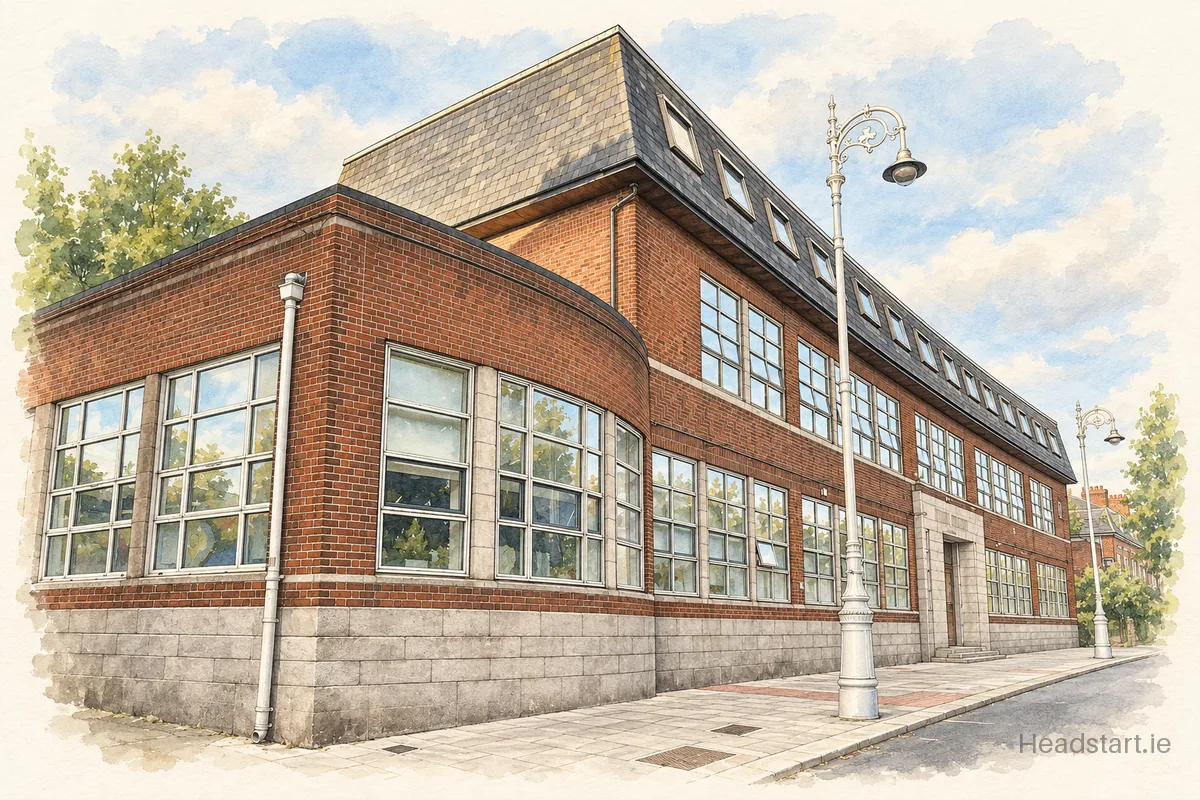
Founded in 1936 as Marino Vocational School, the college was the first regional technical school built by the City of Dublin Vocational Educational Committee, purpose‑designed to serve the new urban housing scheme at Marino Mart. Constructed from Wicklow granite, the original building featured teak‑floored Home Economics rooms, metalwork and woodwork workshops, and a public library. Martin Gleeson, a graduate of University College Dublin, became the first headmaster and later chief executive of the city’s vocational education committee. Between 1936 and 1956 the school accommodated 240 pupils (96 boys, 144 girls) who were taught separately and followed a two‑year programme covering both academic and practical subjects. The school quickly gained a reputation for its choral excellence, regularly competing in Dublin’s Feis Ceoil from the 1940s onward.
Applying to Marino College
For a September 2027 place, a school's formal admissions process cannot begin before 1 October 2026. The school sets its own opening and closing dates in its annual admission notice.
National term dates 2026/27
Irish schools follow a standardised school year, so these nationwide post-primary school dates apply broadly to Marino College. Individual schools set their own discretionary closure days, confirm exact dates with the school.
- October Mid-Term Break: Mon 26 Oct – Fri 30 Oct 2026
- Christmas Holidays: Wed 23 Dec 2026 – Tue 5 Jan 2027
- February Mid-Term Break: Mon 15 Feb – Fri 19 Feb 2027 (primary schools: Thu 18 Feb – Fri 19 Feb 2027)
- Easter Holidays: Mon 22 Mar – Sun 4 Apr 2027
Primary schools close for the last two days of the February mid-term week and may use discretionary days to take the full week, so their break can be shorter than post-primary schools'.
Frequently asked questions about Marino College
How many pupils attend Marino College?
Marino College has 297 pupils enrolled, 143 girls and 154 boys. That makes it smaller than the median Irish post-primary school, which has 585 pupils.
Is Marino College a DEIS school?
Yes. Marino College is part of DEIS, the Department of Education programme called Delivering Equality of Opportunity in Schools. DEIS schools serve communities at risk of educational disadvantage and receive additional supports, which can include smaller classes, extra teaching posts and funding for books and meals.
What is the ethos of Marino College?
Marino College has a Multi Denominational ethos. It is a mixed post-primary school.
Illustration based on a photo by Thoslee. Photo and adapted illustration: CC BY-SA 4.0.