
Corran College
Sligo
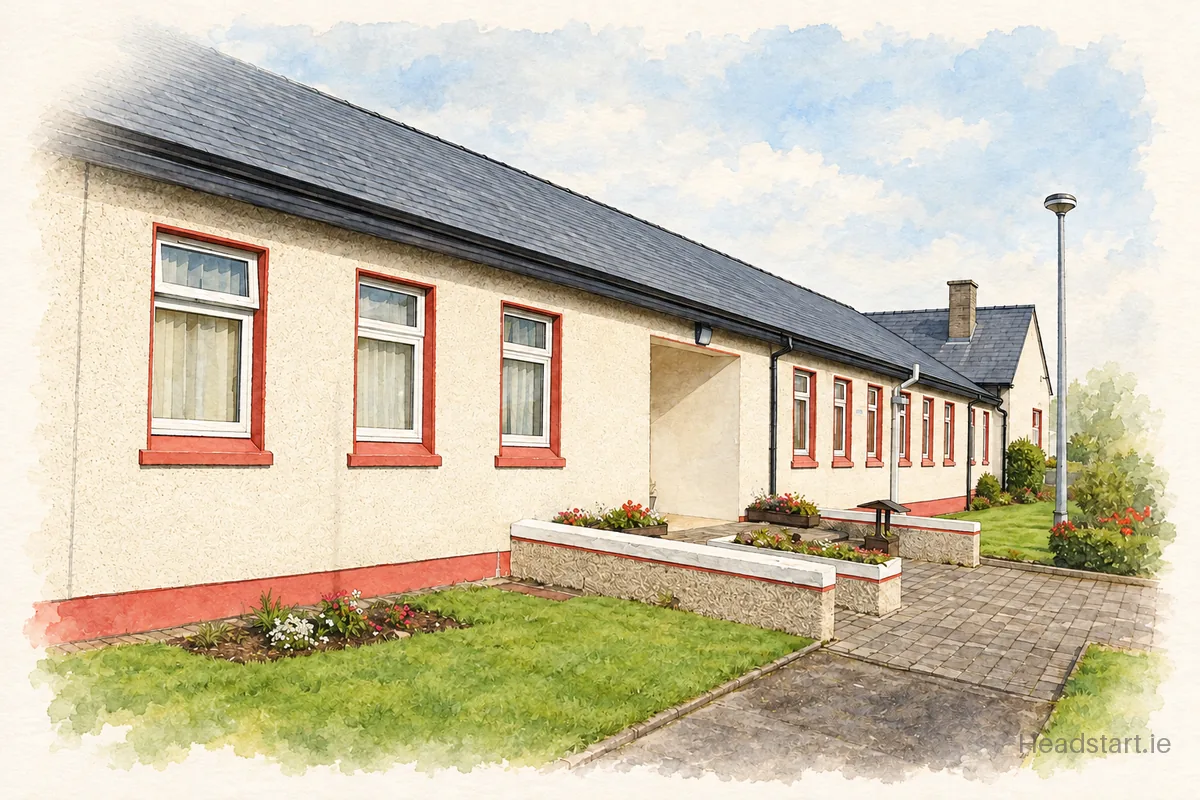
Key facts
- DEIS
- Mixed
- Pupils enrolled
- 154 smaller than the median Irish post-primary school (585 pupils)
- Girls and boys
- 74 girls, 80 boys
- Ethos
- Multi Denominational
- Teaching through Irish
- No subjects taught through Irish
- Roll number
- 72300R the Department of Education reference for this school
School details
Location
About
Corran College is a co‑educational, multi‑denominational secondary school situated in the historic town of Ballymote, County Sligo, under the trusteeship of the Mayo Sligo Leitrim Education and Training Board. The college delivers a balanced curriculum that blends academic rigour with practical and vocational pathways, offering the Junior Cycle, Junior Certificate Schools Programme, Leaving Certificate (both traditional and vocational), Leaving Certificate Applied and a Level 2 Learning programme for moderate‑learning‑difficulty students. The school’s ethos is inclusive, caring and community‑focused, promoting equality of access and participation for all learners. The campus comprises 14 well‑equipped classrooms, including specialised rooms for Home Economics, Science, Wood Technology/Construction, Graphics/DCG, Engineering, Computing and Art, as well as a dedicated moderate‑learning classroom. Two modern IT suites provide broadband connectivity throughout the building, supporting a range of digital learning activities. Corran College also encourages a broad spectrum of extracurricular pursuits, from sport and enterprise workshops to adult education courses such as yoga, cookery and childcare, fostering personal development alongside academic achievement.
History
Corran College was founded in 1934 under the Vocational Education Committee (VEC) Act of 1930 as Ballymote Vocational School, initially enrolling 35 pupils. Early expansions added a woodwork room in 1938 and an engineering room in 1959. The introduction of the Leaving Certificate in the late 1960s broadened the curriculum, and a six‑classroom extension with a hall was completed in 1988, at which point the school adopted the name Corran College, reflecting its location in the Barony of Corran. In 1996 the Leaving Certificate Applied programme and further education (PLC) courses were introduced. The college has a long tradition of adult education evening classes and, in 2017/18, established a special class for students with moderate learning difficulties. Today the school remains a relatively small institution with modern facilities and a commitment to high‑quality, inclusive education.
Applying to Corran College
For a September 2027 place, a school's formal admissions process cannot begin before 1 October 2026. The school sets its own opening and closing dates in its annual admission notice.
National term dates 2026/27
Irish schools follow a standardised school year, so these nationwide post-primary school dates apply broadly to Corran College. Individual schools set their own discretionary closure days, confirm exact dates with the school.
- October Mid-Term Break: Mon 26 Oct – Fri 30 Oct 2026
- Christmas Holidays: Wed 23 Dec 2026 – Tue 5 Jan 2027
- February Mid-Term Break: Mon 15 Feb – Fri 19 Feb 2027 (primary schools: Thu 18 Feb – Fri 19 Feb 2027)
- Easter Holidays: Mon 22 Mar – Sun 4 Apr 2027
Primary schools close for the last two days of the February mid-term week and may use discretionary days to take the full week, so their break can be shorter than post-primary schools'.
Frequently asked questions about Corran College
How many pupils attend Corran College?
Corran College has 154 pupils enrolled, 74 girls and 80 boys. That makes it smaller than the median Irish post-primary school, which has 585 pupils.
Is Corran College a DEIS school?
Yes. Corran College is part of DEIS, the Department of Education programme called Delivering Equality of Opportunity in Schools. DEIS schools serve communities at risk of educational disadvantage and receive additional supports, which can include smaller classes, extra teaching posts and funding for books and meals.
What is the ethos of Corran College?
Corran College has a Multi Denominational ethos. It is a mixed post-primary school.