
Ballinlough National School
Kells, Meath
Key facts
- Mixed
- Pupils enrolled
- 58 smaller than the median Irish primary school (123 pupils)
- Girls and boys
- 41 girls, 17 boys
- Ethos
- Catholic
- Teaching through Irish
- No subjects through Irish
- Roll number
- 09238I the Department of Education reference for this school
School details
Location
About
Ballinlough National School is a mixed Catholic primary school located in the village of Ballinlough on the outskirts of Kells, County Meath. The school caters for children from Junior Infants through to Sixth Class and provides a welcoming, community‑focused environment where pupils are encouraged to develop academically, physically, socially, spiritually, morally and emotionally. Its vision is to create a caring atmosphere in which every child feels happy, confident and motivated to achieve their full potential, with a strong emphasis on inclusiveness, individuality and the nurturing of diverse talents. The curriculum is delivered through a balanced programme that combines traditional academic subjects with a wide range of extracurricular activities, including an autism unit and various arts projects. High expectations for behaviour, work ethic and personal achievement are underpinned by a culture of mutual respect. The school benefits from active partnerships with a vibrant Parents’ Association, a dedicated Board of Management and a supportive patron, all of which contribute to a rich educational experience and a strong sense of community belonging.
History
The school originated in a modest building adjacent to the local Catholic church, a structure now serving as a community centre. Although the exact details of its founding in 1850 are not fully documented, a partial list of headmasters is recorded: Thomas P. Harman (1889‑1893), John Geraghty (1894‑1896), James P. Ward (1897‑1902), Master Ward (‑1925), Master Patrick McDonnell (1925‑1958), Master Vincent Geraghty (1958‑1988) – during whose tenure the school moved to its present site in 1972 – followed by Masters Patrick Marrinan, Margaret Ryan, Goretti Usher and the current principal. The school has evolved from a two‑teacher operation to a modern primary school with a range of facilities and dedicated staff.
Applying to Ballinlough National School
For a September 2027 place, a school's formal admissions process cannot begin before 1 October 2026. The school sets its own opening and closing dates in its annual admission notice.
National term dates 2026/27
Irish schools follow a standardised school year, so these nationwide primary school dates apply broadly to Ballinlough National School. Individual schools set their own discretionary closure days, confirm exact dates with the school.
- October Mid-Term Break: Mon 26 Oct – Fri 30 Oct 2026
- Christmas Holidays: Wed 23 Dec 2026 – Tue 5 Jan 2027
- February Mid-Term Break: Thu 18 Feb – Fri 19 Feb 2027 (post-primary schools: Mon 15 Feb – Fri 19 Feb 2027)
- Easter Holidays: Mon 22 Mar – Sun 4 Apr 2027
Primary schools close for the last two days of the February mid-term week and may use discretionary days to take the full week, so their break can be shorter than post-primary schools'.
Frequently asked questions about Ballinlough National School
How many pupils attend Ballinlough National School?
Ballinlough National School has 58 pupils enrolled, 41 girls and 17 boys. That makes it smaller than the median Irish primary school, which has 123 pupils.
Is Ballinlough National School a DEIS school?
No. Ballinlough National School is not part of DEIS, the Department of Education programme of additional supports for schools serving communities at risk of educational disadvantage. Not holding DEIS status says nothing about how good a school is, only about the profile of the community it serves.
What is the ethos of Ballinlough National School?
Ballinlough National School has a Catholic ethos. It is a mixed primary school.
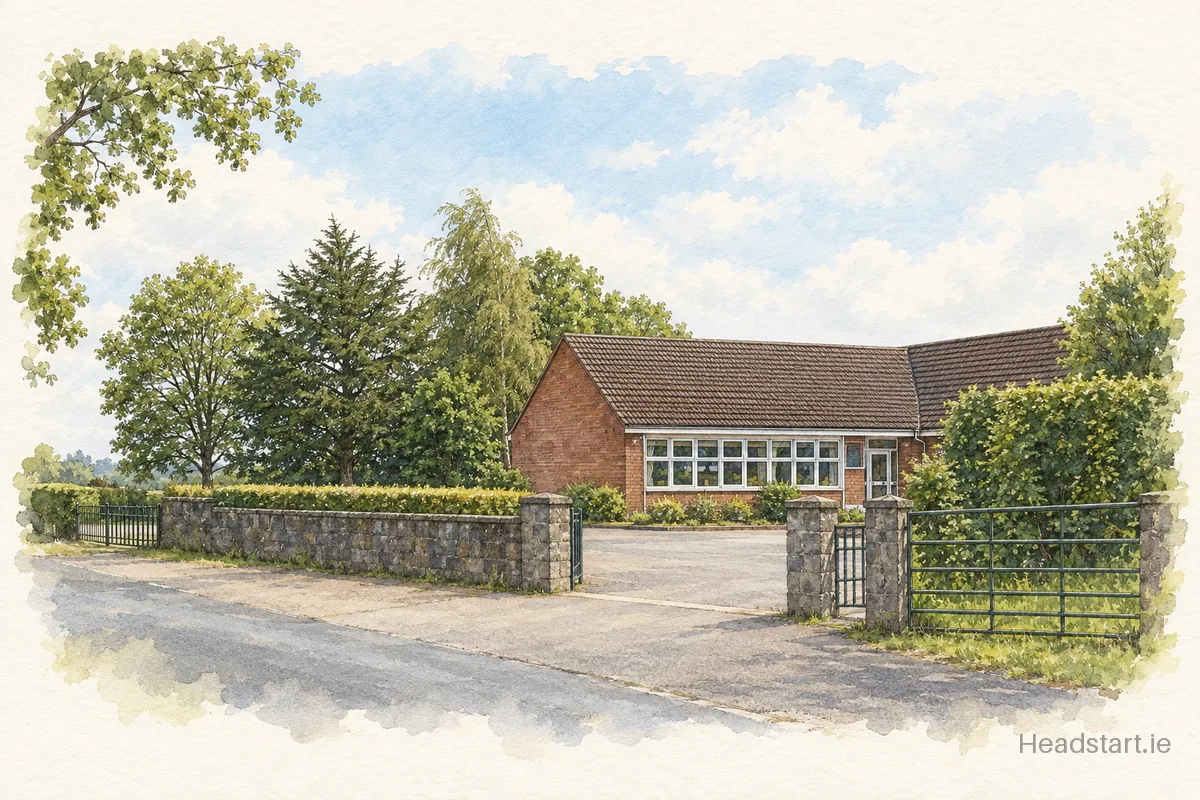
Illustration based on a photo by Eric Jones. Photo and adapted illustration: CC BY-SA 2.0.