
Why the dinosaur phase is worth encouraging
A four-year-old who can say Pachycephalosaurus without tripping is doing more than showing off. Dinosaur names are long, made of recognisable parts and fun to sound out, which makes them surprisingly good practice for early reading. Sorting dinosaurs into plant-eaters and meat-eaters, two legs and four, or big and enormous is the same grouping and comparing children later meet in maths and science.
Dinosaurs also give young children their first taste of how science works. Nobody has ever seen one, so everything we know comes from evidence: bones, footprints, teeth and the rock they were found in. "How do we know?" is a brilliant question for a six-year-old to get used to asking, and dinosaurs invite it constantly.
Ireland's only dinosaurs
For a long time the honest answer to "were there dinosaurs in Ireland?" was that nobody had found any. That changed in 2020, when researchers looked again at two fossil bones collected in the 1980s by Roger Byrne, a schoolteacher and keen fossil hunter, on the shore at Islandmagee in Co Antrim. He had donated them to the Ulster Museum in Belfast.
The bones had always been assumed to come from one animal. The team, led by Dr Mike Simms of National Museums NI with researchers from the University of Portsmouth and Queen's University Belfast, found they came from two completely different dinosaurs, both about 200 million years old, from the Early Jurassic:
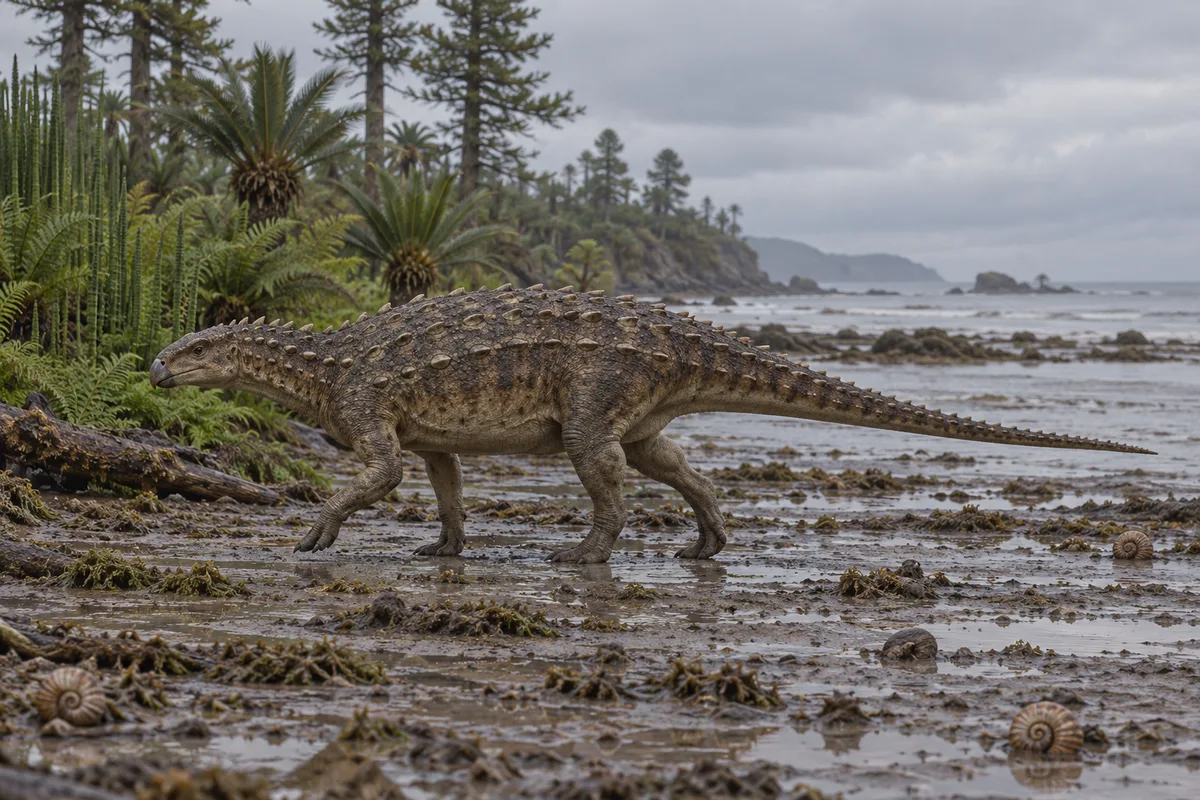
- Scelidosaurus, a four-legged plant-eater about four metres long with rows of bony studs along its back, an early relative of the armoured dinosaurs. You can see what it looked like, how it measures up against a person and where else it has been found on the Scelidosaurus fact page, and meet its armoured cousins among the thyreophorans.
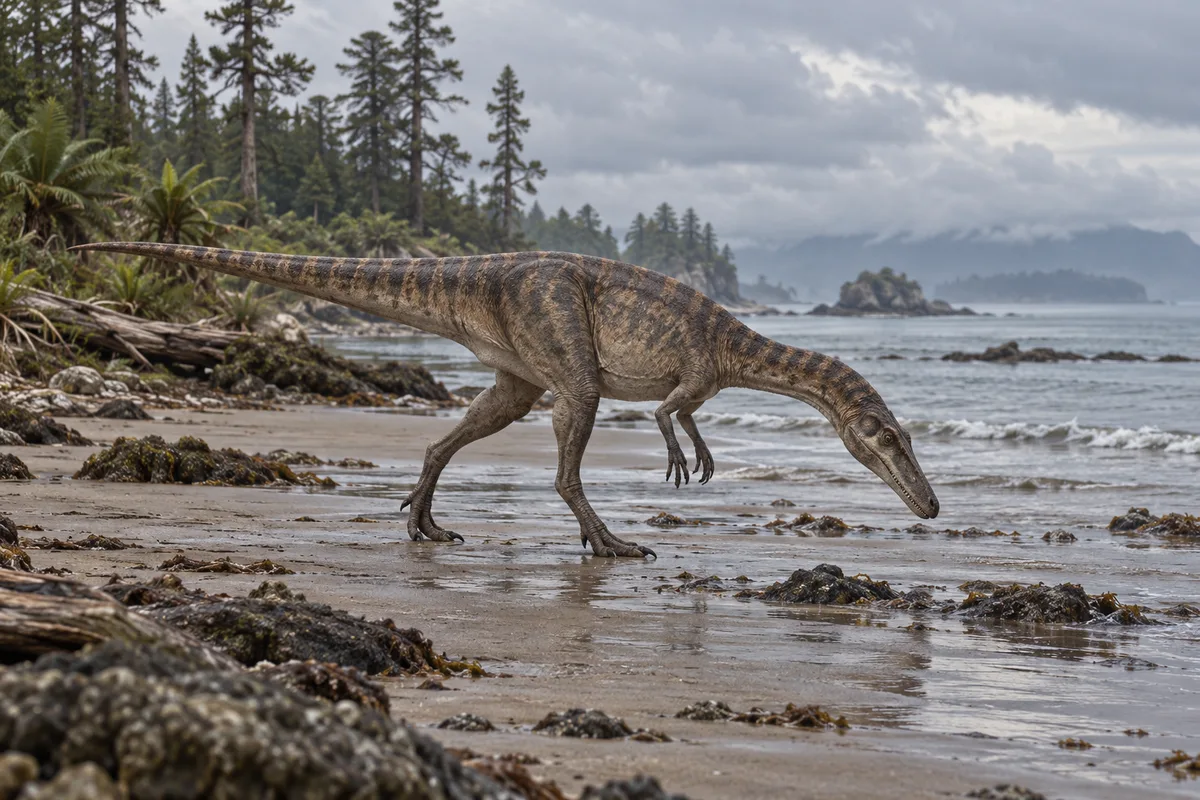
- A two-legged meat-eater similar to Sarcosaurus, a lightly built hunter about three metres long. The Sarcosaurus profile shows the closest match, which until then was only known from England.
The research was published as First dinosaur remains from Ireland in the Proceedings of the Geologists' Association.
Why so few?
It is not that dinosaurs avoided Ireland. Most of the rock at the surface here is simply the wrong age: much of it is far older than the first dinosaurs, and most of what was laid down during their time has since been worn away. The small patches of Jurassic rock that survive are mainly in Co Antrim, sheltered under later chalk and the same lava flows that made the Giant's Causeway. Even those rocks formed on the floor of a shallow sea, so the Islandmagee bones belonged to animals whose bodies were washed out from the land. To see what the world looked like at the time, the Jurassic period page is a good place to start.
Dinosaur Vault: a great free resource
Once a child has exhausted the dinosaur books in the house, they usually want to know about the ones that are not in them. Dinosaur Vault is a great resource for that. It is free, it is built around pictures rather than walls of text, and it goes far deeper than the usual top twenty.
- An A to Z of more than 1,200 dinosaurs. The dinosaur directory runs from the famous names to ones even keen children will not have heard of. Each page has an illustration, key facts, a size comparison against a person, a fossil map and its closest relatives, so one lookup tends to lead to three more.
- A timeline. The dinosaur timeline splits the age of dinosaurs into the Triassic, Jurassic and Cretaceous, which is the easiest way to explain why some dinosaurs never met.
- Fossil maps by country. Where dinosaurs were found covers dozens of countries. The dinosaurs found in the United Kingdom page is the closest to home, and includes the relatives of both Islandmagee dinosaurs.
- Ancient Earth maps. Ancient Earth shows how the continents were arranged at different points in the past, which usually prompts the question "so where was Ireland?"
- Colouring pages and games. Free printable dinosaur colouring pages for a wet afternoon, and a guess the dinosaur quiz for children who think they know them all.
Matching it to your child's age
Ages 3 to 5: names, pictures and colouring
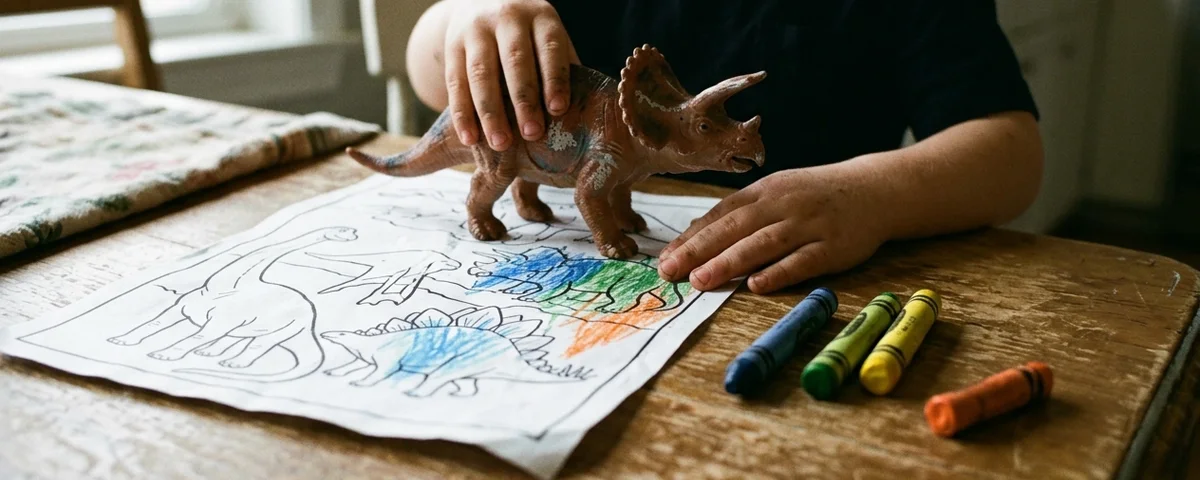
At this age the pictures do the work. Print a Triceratops colouring page or a T. rex to colour, then look the same dinosaur up together and talk about what it ate and how big it was. If your child has a favourite toy dinosaur, find it in the directory and check the size comparison: discovering that a Triceratops was longer than the family car goes down very well.
Ages 6 to 8: when, where and who would win
Children this age start asking which dinosaurs lived together, which is where the timeline earns its keep. A favourite fact to share: more time separates Stegosaurus from Tyrannosaurus rex than separates T. rex from us. The guess the dinosaur quiz is a good test once they think they are an expert, and the Islandmagee story is a ready-made piece of show and tell.
Ages 9 to 12: maps, evidence and projects
Older children tend to move from "which is biggest" to "how do we know". Comparing the fossil maps with the Ancient Earth maps shows why dinosaurs turn up where they do, and the Islandmagee find is a perfect case study for a school project: a real discovery, made close to home, by a teacher, and only understood decades later. The original paper is technical, but the illustrations and the story behind it are well within reach at this age.
Where to go next
If the dinosaur phase is in full swing when a birthday comes round, our guide to kids' birthday party ideas covers venues, costs and how far ahead to book. For school holidays, the school holidays and term dates page has the exact midterm and holiday dates, and the summer camps directory lists science, nature and special-interest camps across the country.